Faculty Spotlights
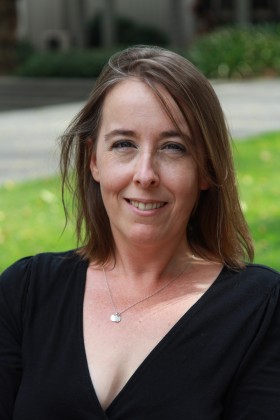
Megan Welsh
Assistant Professor in Educational Assessment and Measurement
Megan Welsh, who teaches in the School’s PhD and MA programs, conducts research in the use of assessment as an educational reform lever. She is an expert in evaluation of educational programs and the science of developing methods for determining the quality and validity of assessments.
“The context for my work is educational reform, particularly as it relates to accountability for schools and teachers,” said Welsh. “I am interested in how teachers respond to assessments and accountability efforts and how their work changes as a result of assessment.”
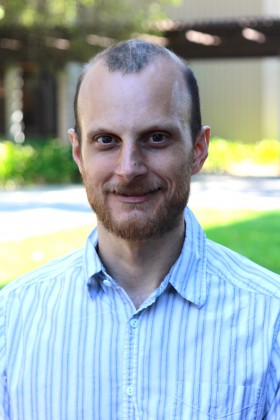
Paco Martorell
Assistant Professor in Education Policy
Paco Martorell, who is teaching in the School’s doctoral programs, has broad research interests in both higher education and K-12 policy, particularly in the transitions between high school and college and between college and work.
In a current field experiment, Martorell is exploring new methods for placing students entering community college into remedial, or developmental, courses and assessing whether those students can move more quickly through these preliminary courses than students typically do.
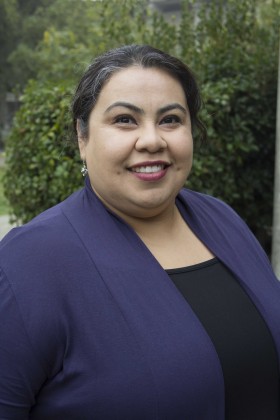
Marcela Cuellar
Assistant Professor in Higher Education Leadership
For Professor Marcela Cuellar, examining the transformative power of education has been a lifelong passion. “My parents moved to Oxnard, a coastal California town, in the late 1970s to work in the strawberry fields,” said Cuellar. “As the youngest of six children, in addition to Spanish, I learned English from my siblings and had a different trajectory because of it.
Kevin Gee: Researching Health’s Impact on Learning
By Charisse Ceballos (November 2013)
Few would argue that education exists in a vacuum. There are many elements at work that impact the ability of students to learn. Poverty, gender, and ethnicity are common factors affecting education.
However, one vital ingredient that is frequently overlooked is health. UC Davis School of Education’s Assistant Professor Kevin Gee’s research sheds much-needed light on this connection between a student’s health and their learning abilities.
Cynthia Carter Ching
What About the “T” IN STEM? Is Technology the Answer?
Among the oft-mentioned challenges in education is the challenge of preparing students for success in the twenty-first century workforce. Technology is just as often cited as the solution.
The hope is that the use of technology in the classroom (for example, the use of video or an interactive whiteboard) will raise student performance, particularly in math and science. But it turns out that unless the instruction itself is challenging and engaging, the use of technology won’t make any difference.
“Technology is just a tool,” according to education professor Cynthia Carter Ching. “Live streaming of a boring lecture is still boring.”
Heidi Ballard
Leading at the Intersection of Science, Education and Social Justice
Coming from a long line of teachers, Heidi Ballard was sure of one thing when she entered college: she was not going to become a teacher. Five years later, she found herself teaching high school biology.
Michal Kurlaender
For Michal Kurlaender, conducting “research that matters” means tackling some of the most vexing and controversial problems in education: school desegregation and integration, access to college, and race.
Steven Athanases
Steven Athanases started his career as a high school English teacher in the Chicago area, filling students’ minds with the tales of John Steinbeck, Harper Lee and Langston Hughes for over 10 years.
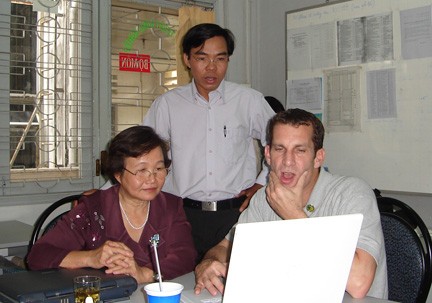
Cary Trexler
In 2007, Cary Trexler, an assistant professor and expert on agriculture education, was awarded a prestigious Fulbright fellowship to extend his research and outreach in Vietnam. “Ultimately, all of this work has the potential to move the School of Education beyond a focus on secondary schools to opportunities for education policy and administration,” said Trexler. “It is potentially an opportunity to understand and participate in a restructuring of an entire educational system.”
Cindy Passmore
Science is not boring, so why do so many middle and high school students think it is? According to Cindy Passmore, assistant professor and an expert on science education, students most often experience science in school as the memorization of facts and procedures with little practical utility or intellectual interest.
“This results in an impoverished view of science as an intellectual enterprise,” said Passmore.
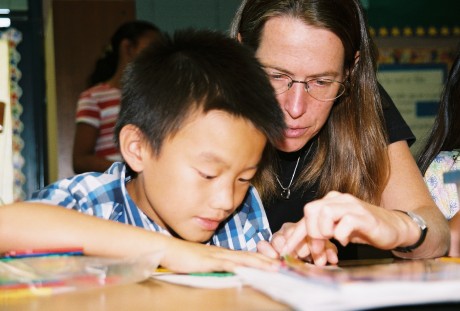
Rebecca Ambrose
For Rebecca Ambrose, the key to teaching math to children lies in an understanding of how they solve problems before anyone has taught them.
“Kids use informal strategies and can figure things out in very interesting and sophisticated ways. What we observe about how they approach mathematical problem solving can inform the basis for teachers’ instruction,” said Ambrose.