
Meet the 2026 Mentorship Award Recipients
Two Educators Share How They Support and Learn Alongside Future Teachers
Resident teachers open their classrooms to credential candidates, helping them navigate the challenges and rewards of becoming an educator while offering guidance, feedback, and support to develop their own teaching practice. Each spring, School of Education students nominate their resident teachers for the annual Mentorship Award, recognizing the educators who have made a lasting impact on their development.
This year’s recipients are Matthew Tealdi, a fourth-grade teacher nominated by Bryan Tan, and Sarah Ronayne, an agriculture teacher nominated by Caitlin Holder. In his nomination letter, Tan addressed Tealdi’s commitment to bridging theory and practice, noting that he always seemed one step ahead of UC Davis coursework. “Through Mr. Tealdi’s mentorship, I feel I have been given an exclusive, accelerated course on ways to improve every aspect of my teaching,” wrote Tan.
Holder recognized Ronayne for her generous support and thoughtful honesty. “Mrs. Ronayne has only been generous with her earned wisdom, sharing personal and professional stories about compassion, failure, wins and losses, hardship, and joy,” wrote Holder in her nomination letter. “I can truly say Mrs. Ronayne has created an atmosphere for me to learn by doing, preparing and empowering me for the next chapter of my career.”
Matthew Tealdi: A Commitment to Growth
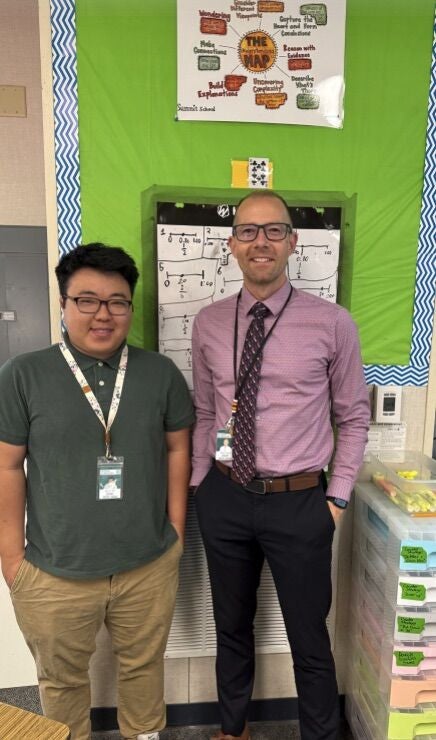 When the 2025–26 school year began,
Matthew Tealdi tried something he’d never done before. After
completing a summer professional development workshop, the
20-year veteran teacher introduced visual arts, theater, and
dance into his daily lessons, pushing himself beyond his comfort
zone and experimenting with new approaches. “We tell students
that we want them to be okay with taking risks and making
mistakes,” he said. “So I really needed to model that myself.”
When the 2025–26 school year began,
Matthew Tealdi tried something he’d never done before. After
completing a summer professional development workshop, the
20-year veteran teacher introduced visual arts, theater, and
dance into his daily lessons, pushing himself beyond his comfort
zone and experimenting with new approaches. “We tell students
that we want them to be okay with taking risks and making
mistakes,” he said. “So I really needed to model that myself.”
Tealdi also had a secondary motive for introducing material that challenged him. He wanted credential candidate Bryan Tan to see that teaching is a lifelong process of growth and development. “I don’t want to do something because it’s always been done that way,” said Tealdi. “I’m constantly asking myself from one year to the next, ‘Did that lesson make sense? Is there anything that needs to be changed?’”
Inquiry is central to Tealdi’s teaching philosophy, and a skill he encourages all new teachers to hone. Educators can get used to teaching lessons a certain way, but regularly questioning how and why they teach can help them better meet students’ needs. “Classrooms are so dynamic that we need to be prepared to meet kids where they are, and that’s going to be different every year,” Tealdi said.
By encouraging credential candidates to reflect on their teaching, Tealdi also hopes they’ll check in with themselves more often. Teaching, especially in the first years, can bring immense pressure to have all the answers. But accepting that mistakes and uncertainty are part of teaching can help new educators develop resilience and compassion for themselves and their students.
“There are times when you won’t feel entirely comfortable in the classroom or when you’ll be frustrated with someone. But you’ll also have times where you’ll be really happy teaching,” said Tealdi. “All of these emotions make us human and we’re all feeling them together: students, credential candidates, and teachers. I just want to establish the idea that yes, we are in school for a purpose—I’m here to teach and the students are here to learn—but it goes so much deeper than that. We really are building a community.”
It’s this sense of community that inspired Tealdi to become a mentor teacher in the first place. Having benefited from this kind of support throughout his career, he now feels a responsibility to help provide it for others. To Tealdi, giving back to the profession is exactly what makes education better for everyone. “There’s still things I do today that I learned from my mentor teacher 20 years ago, and I’m sure the other mentor teachers feel the same,” he said. “That’s really how we better the field: we give what we can to the best of our abilities, so that future teachers can go even deeper and farther than we have.”
Sarah Ronayne: Teaching for the Long Haul
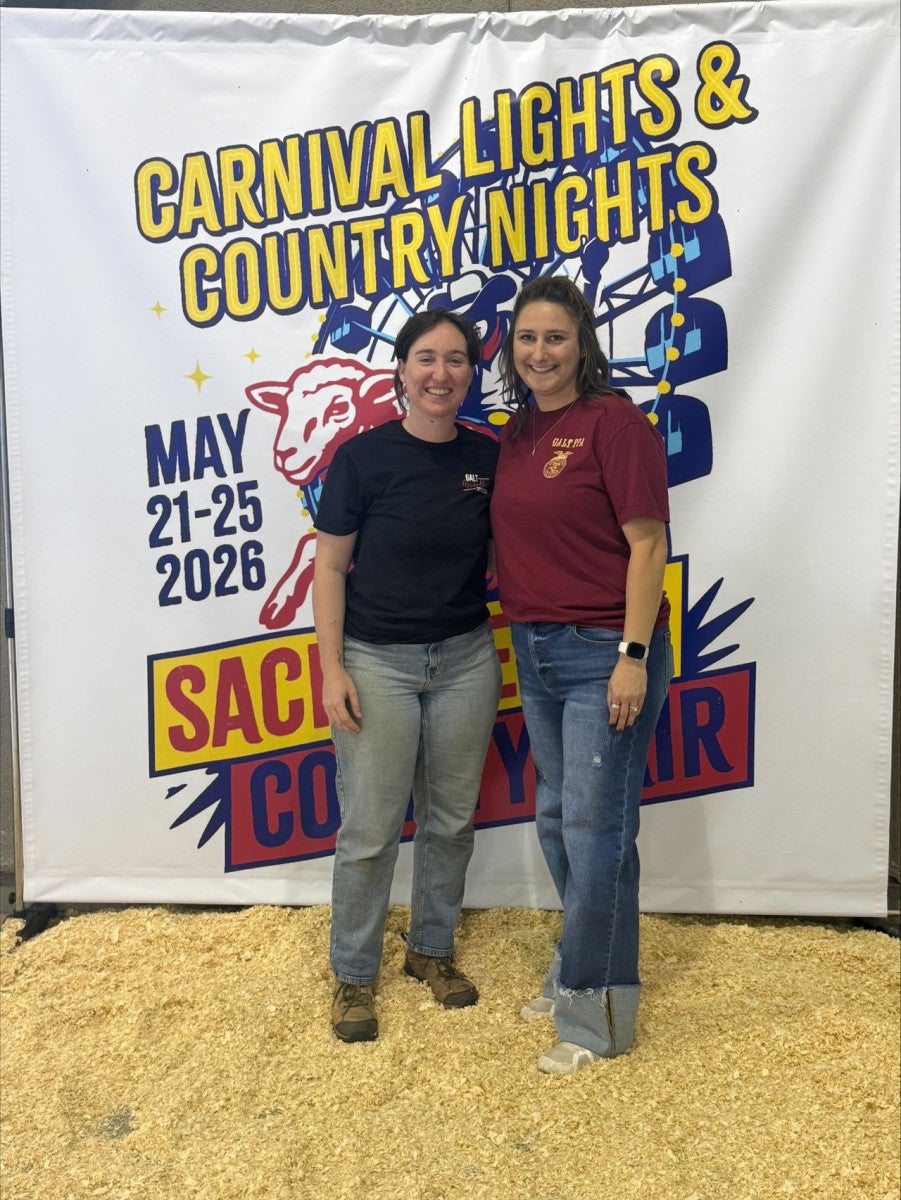 No two workdays are the same for
high school agriculture teacher Sarah Ronayne, Cred. ’14, M.A.
’15. She seamlessly moves between coaching speaking contests,
checking pig weights, adjusting feeding schedules, and teaching
showmanship. After hours, she might even drive out to check on a
student’s sick animal before calling the vet. “That’s what makes
teaching ag so fun,” said Ronayne. “You don’t get stuck in a
routine.”
No two workdays are the same for
high school agriculture teacher Sarah Ronayne, Cred. ’14, M.A.
’15. She seamlessly moves between coaching speaking contests,
checking pig weights, adjusting feeding schedules, and teaching
showmanship. After hours, she might even drive out to check on a
student’s sick animal before calling the vet. “That’s what makes
teaching ag so fun,” said Ronayne. “You don’t get stuck in a
routine.”
Ronayne embraces the unpredictability that teaching brings, and she encourages credential candidates to do the same. Agriculture teachers often balance classroom instruction with FFA activities, livestock projects, competitions, and student advising. Learning how to manage those responsibilities without becoming overwhelmed is one of the most important lessons she hopes to pass on to future educators. “You have to decide what your goals are and what you’re able to prioritize,” she said. “That’s really when you decide the kind of teacher you want to be.”
For Ronayne, that means being honest about both the rewards and challenges of teaching. Those conversations arose frequently during her work with student teacher Caitlin Holder. Together, they discussed teacher burnout, the demands of agricultural education, and the importance of focusing energy where it can make the greatest difference. “One area of growth was Caitlin just realizing what was in her control and what she was able to fix in the classroom,” Ronayne said. “You can’t really get down on the things that are beyond your control. You have to find things where you can make change and focus on those.”
Rather than trying to solve every problem she encountered, Ronayne encouraged Holder to focus on the areas where she could have the greatest impact. Lasting success comes from understanding personal limits and making thoughtful decisions about where to invest time and energy. “There’s so many things you’re going to wish you could do,” said Ronayne. “But you have to decide as a teacher what your goals are and what you’re going to prioritize.”
Just as Ronayne helped Holder navigate the realities of teaching, Holder encouraged Ronayne to reflect on her own practice. She recalls sharing lessons she felt could be improved but hadn’t had time to redesign herself. Holder approached the material differently, offering fresh ideas and new perspectives. “I’d say to Caitlin, ‘This is what I’ve been doing for a few years, but I don’t really love it,’” Ronayne said. “And she’d take it and try to make something different. Student teachers are bringing so much to the table, as much as you’re teaching them.”
That exchange of ideas is one of the reasons Ronayne values mentoring credential candidates. “I think being a mentor is as beneficial for the mentor as it is for the mentee,” she said. “It really makes you reflect.” Mentorship also reminds Ronayne of why she entered the education field in the first place. “Seeing credential students’ excitement about joining the profession reinvigorates my passion for teaching,” she said.