
Project Update: Launching a prison-based California Naturalist certification course
First-of-its-kind program brings environmental education and rehabilitation together through an NSF-funded partnership.
The UC Davis Center for Community and Citizen Science has launched the first California Naturalist Certification course at the California Health Care Facility (CHCF) in Stockton, marking a significant milestone in an innovative National Science Foundation-funded research project exploring environmental stewardship, naturalist education, and community science within correctional settings.
The inaugural cohort includes 19 incarcerated participants who will complete the California Naturalist curriculum while engaging in hands-on ecological learning and environmental stewardship. The course is part of the Science Inside project, a collaborative effort designed to examine how nature-based education and participation in community science can foster learning, personal growth, and environmental engagement among incarcerated individuals.
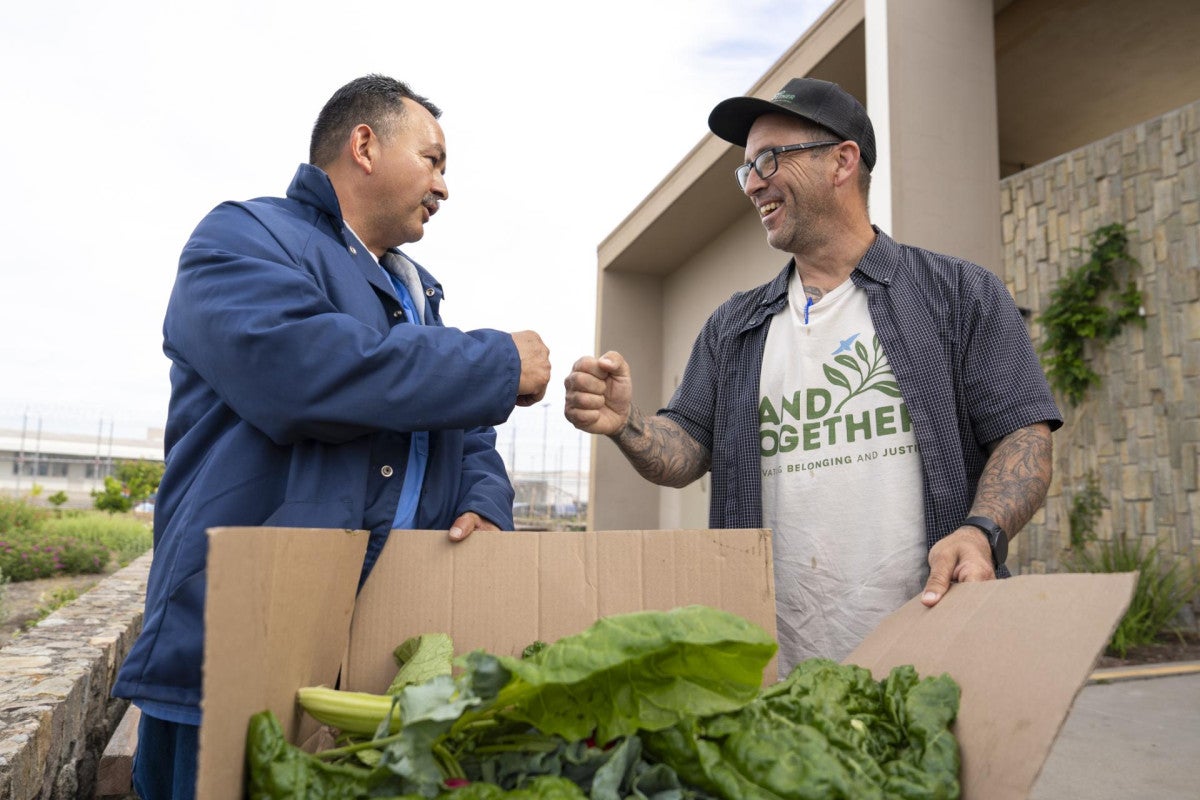
The program builds upon years of successful work by Land Together (formerly the Insight Garden Program), whose rehabilitative programming has helped participants cultivate not only thriving gardens, but also meaningful opportunities for personal reflection, responsibility, and growth.
 Unlike traditional classroom
instruction, the California Naturalist Program combines
scientific inquiry with direct experiences in nature.
Participants explore California’s ecosystems, biodiversity,
wildlife, natural history, and conservation challenges while
developing observation, critical thinking, and stewardship
skills. Throughout the course, participants contribute to
community science projects and gain a deeper understanding of the
natural world surrounding them.
Unlike traditional classroom
instruction, the California Naturalist Program combines
scientific inquiry with direct experiences in nature.
Participants explore California’s ecosystems, biodiversity,
wildlife, natural history, and conservation challenges while
developing observation, critical thinking, and stewardship
skills. Throughout the course, participants contribute to
community science projects and gain a deeper understanding of the
natural world surrounding them.
The CHCF course represents a unique collaboration among the UC Davis Center for Community and Citizen Science, the University of California Agriculture and Natural Resources California Naturalist Program, Land Together, the California Department of Corrections and Rehabilitation, and numerous community partners committed to expanding access to high-quality environmental education.
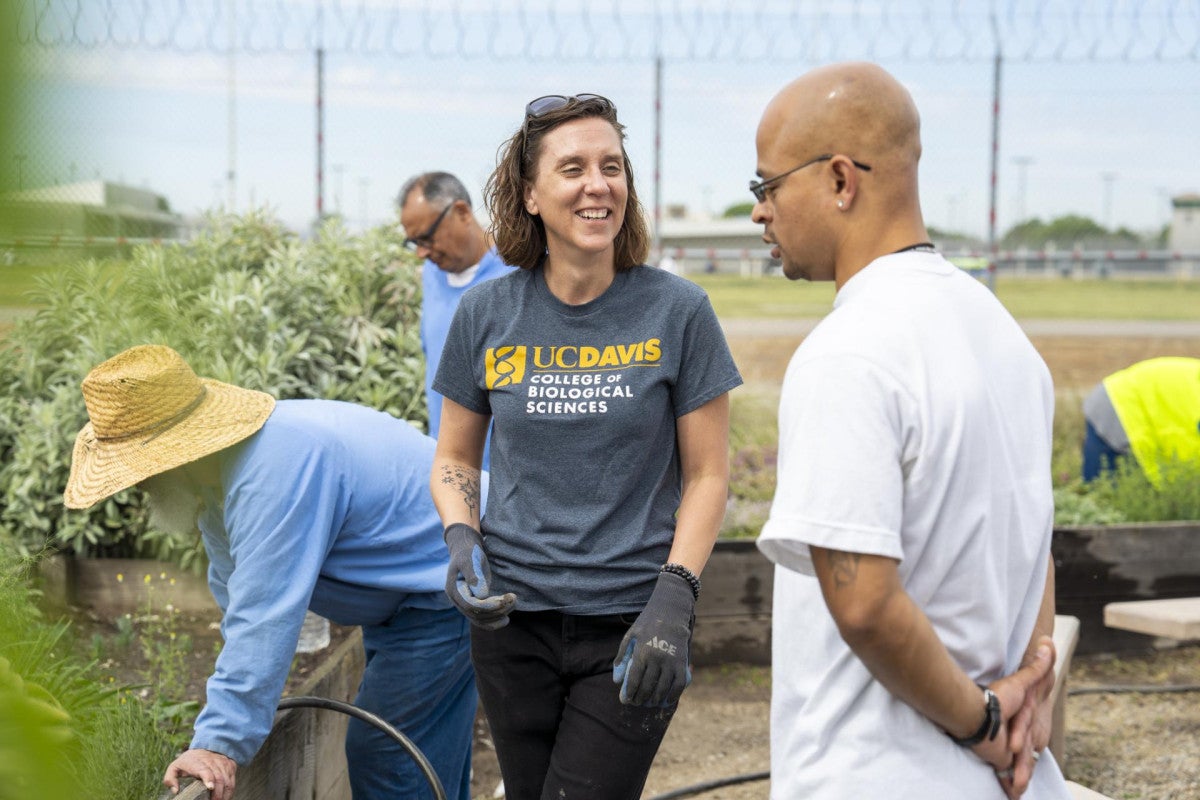 Getting this program up and running
has been no small feat, and I’m really proud of the whole team
for seeing it through,” said Laci Gerhart, Principal Investigator
for the Science Inside project. “Land Together has already laid a
really strong foundation of a cohort of incarcerated men who are
deeply dedicated not only to the vibrant garden that they have
built together, but also to deeply and honestly working through
the rehabilitation portions of the programming. “In the six years
that I’ve been going into the prison gardens with Land Together,
I’ve learned so much from the incarcerated men, and I’m honored
to have a chance to repay that through this class.”
Getting this program up and running
has been no small feat, and I’m really proud of the whole team
for seeing it through,” said Laci Gerhart, Principal Investigator
for the Science Inside project. “Land Together has already laid a
really strong foundation of a cohort of incarcerated men who are
deeply dedicated not only to the vibrant garden that they have
built together, but also to deeply and honestly working through
the rehabilitation portions of the programming. “In the six years
that I’ve been going into the prison gardens with Land Together,
I’ve learned so much from the incarcerated men, and I’m honored
to have a chance to repay that through this class.”
For many participants, the course represents more than an opportunity to learn about California’s natural resources. It offers a chance to see themselves as scientists, conservationists, and contributors to their communities. The curriculum emphasizes observation, curiosity, collaboration, and evidence-based thinking—skills that extend well beyond the classroom.
Gary Burt, Land Together Program Manager, emphasized the connection between education and rehabilitation.
“True rehabilitation begins with hope, and education gives that hope direction,” Burt said. “This program brings rehabilitation and science together, showing us and our participants that science teaches that change is not only possible—it’s a natural part of life.”
The Science Inside project seeks to better understand how environmental education and community science experiences can influence science identity, environmental stewardship, and pathways toward successful rehabilitation. Findings from the project will help inform future educational partnerships between universities, correctional institutions, and community organizations while contributing to broader conversations about inclusive participation in science.
The launch of the California Naturalist course represents an important first step in that work. As participants explore California’s landscapes, ecosystems, and conservation challenges, they also become part of a growing effort to expand opportunities for learning, scientific engagement, and stewardship in places where those opportunities have historically been limited.
Through collaboration, education, and a shared commitment to rehabilitation, the partners hope this inaugural course will serve as a model for future programs that demonstrate the transformative potential of science education in correctional settings.