
From Schoolyard to Biodiversity Hotspot
Fourth Graders Join the City Nature Challenge
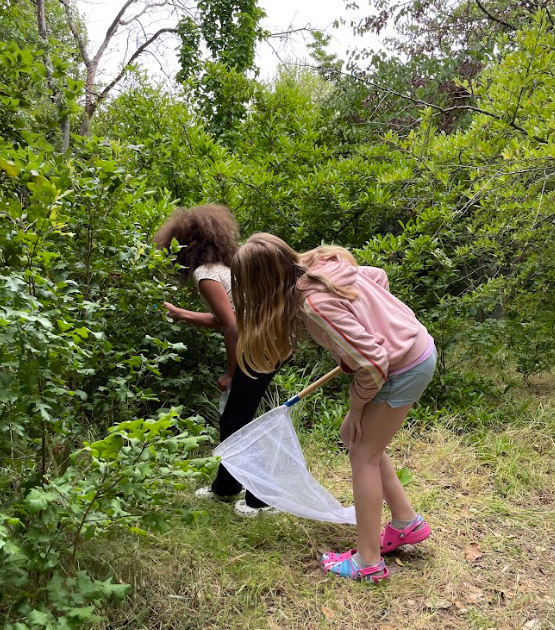
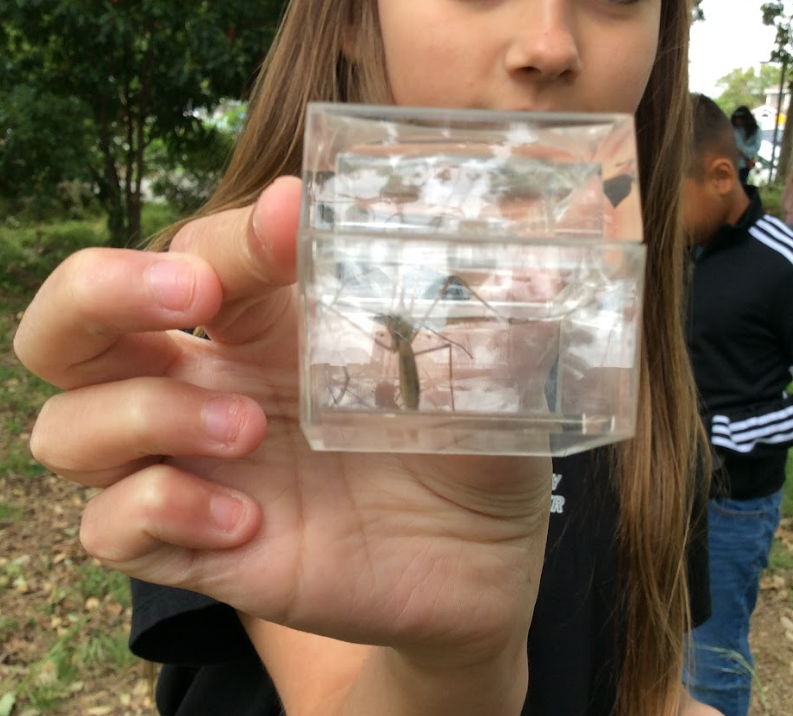
This spring, in celebration of the 10th anniversary of the City Nature Challenge, I had the joy of watching a group of Dixon 4th graders transform their school campus. Eyes wide as they were amazed by the power of their own observations as, in their eyes, their school yard was transformed from the schoolyard they engage with every day into a thriving field site where they were able to make observations as real scientists. Insect nets, critter keepers and iPads loaded with the iNaturalist app in hand, these young naturalists joined tens of thousands of people around the world in documenting the biodiversity in their own communities.
If this sounds familiar, it’s because these students are becoming seasoned bioblitzers. Just seven months ago, the same students in Mrs. Pitto’s class helped mark California Biodiversity Day by conducting their very first bioblitz—observing everything from stink bugs to sycamore trees on their school grounds. That experience sparked curiosity and raised a simple but powerful question: What else is living here that we haven’t noticed yet?
To help answer that question, we returned this April for the City Nature Challenge, a global event that invites communities to observe and share the plants, animals, fungi, and other organisms around them. Our focus remained local and accessible: right outside the classroom doors. With support from their teacher and our Center, the students took the lead—scouting under rocks, gently examining flowers, and scanning the skies for birds and bugs alike.
Before heading outside, we did a little data literacy skill building and exploring. The class logged on to the iNaturalist project page for their county I had created for this type of hyper-local biodiversity inquiry. They were able to see the wide variety of biodiversity that had been observed in their area. They learned about which birds were the most common, which insects were invasive, and even had a chance to work on some geospatial analysis, drilling into the maps to see if they could decipher where the most observations were coming from. Once our exploration of the data was complete, we headed outside to see what was on their campus- the first official day of the 2025 City Nature Challenge.
Some students took on the role of photographers, capturing photos to upload to iNaturalist. Others served as data managers, making sure observations were tagged with accurate location info. Still others became species detectives, using their skills of observation to find a wide variety of species, high and low. The students’ excitement was contagious—when someone spotted a previously unnoticed gall, spider or insect, the whole group would rush over to get a closer look.
What stood out most was how their observations built on the ones they had made back in the fall. They noticed how the plants in their pollinator garden had changed with the seasons, how some insects were missing while others had returned, and how the galls on the oak tree seemed to be dropping. These young scientists were beginning to think like ecologists—asking questions, noticing patterns, and seeing themselves as part of a broader community of observers. After conducting our own bioblitz, we then returned to the classroom for more data analysis, looking deeper into the observations that were coming in from all over the world.
On Monday, the last day of the City Nature Challenge, the class returned to the site to see what feedback they had received. The students were thrilled to see that not only had their observations been verified, but many of them had become research grade, allowing them to become a part of a global biodiversity database.
From Mrs. Pitto:
“They LOVED seeing their pictures on the site- they think they are famous. The green “Research Grade” label was SOOOOO exciting.”
 Our team at the Center for
Community and Citizen Science sees events like the City Nature
Challenge as more than just data collection. They are invitations
for young people to become curious, capable contributors to
science. This school’s participation is a testament to what’s
possible when we support students in getting outside, asking
questions, and making observations that matter—not just for their
learning, but for our shared understanding of the natural world.
Our team at the Center for
Community and Citizen Science sees events like the City Nature
Challenge as more than just data collection. They are invitations
for young people to become curious, capable contributors to
science. This school’s participation is a testament to what’s
possible when we support students in getting outside, asking
questions, and making observations that matter—not just for their
learning, but for our shared understanding of the natural world.
As we mark ten years of the City Nature Challenge, I’m reminded that big movements often grow from small, local actions. A single hawk sighting in a schoolyard might not seem like much—but when joined with millions of other observations, it becomes part of a powerful story of connection, discovery, and stewardship.
Here’s to the next ten years—and to the fourth graders who are already leading the way.