
From Showing Up to Stepping Up: Students’ Journeys Through the Spinning Salmon Showcase
Authors: Becca VanArnam, Peggy Harte, and High School Students: Nico, Uzair, Angeline, Juju, and Melody
What changes when students are given the opportunity to return, lead, create, and share their work over time? At our second annual Spinning Salmon Showcase, held at the Solano County Office of Education, that question came into focus through the experience of several students who helped shape this year’s event in different ways. Last year’s showcase introduced a powerful idea: giving students a space to share their science, their stories, and their voices. This year, that vision continued to grow with 40 students representing six schools in attendance. Additionally, there were more than 40 guests, including representatives from organizations and institutions such as UCDavis, California Department of Fish and Wildlife, California Trout, NOAA Fisheries, the Solano County Office of Education, alongside teachers, principals, and family members who came to support students and engage with their work.
What made this year especially meaningful was not just the number of students involved, but the many different ways students chose to contribute. Some students stepped into leadership roles during presentations, others shared personal stories connected to their projects, and some contributed creatively through art and design. Together, these experiences reflected the many ways students are beginning to see themselves as part of science and the scientific community.
To protect student privacy, all student names used throughout this blog are pseudonyms.
A Different Kind of Presence
When Nico first joined the program last year, he was one of many students learning how to collect data, care for salmon, and make sense of complex environmental systems. This year, Nico showed up differently.
In the classroom, he became someone others looked to. Nico volunteered for tasks, helped organize group efforts, and consistently stepped forward to present group work to visitors. Reflecting on that growth, Nico shared that “taking on more of a leadership role this year helped me become more responsible and more confident in sharing ideas with others.”
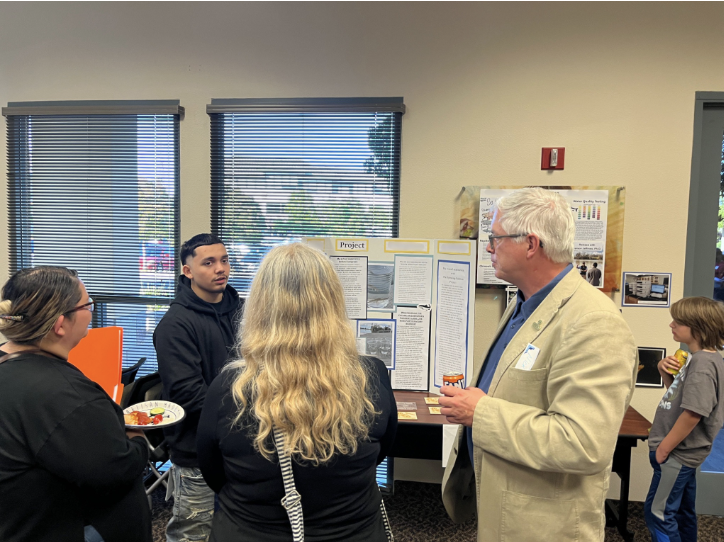 By the time the showcase arrived,
that confidence carried into every interaction. Throughout the
event, there was a steady stream of people stopping at the
display. Teachers, community members, and family members were
drawn in, and Nico met each conversation with energy and clarity.
Questions were answered thoughtfully, ideas were expanded on, and
conversations continued throughout the event. Nico was not just
presenting. Nico was leading the conversation.
By the time the showcase arrived,
that confidence carried into every interaction. Throughout the
event, there was a steady stream of people stopping at the
display. Teachers, community members, and family members were
drawn in, and Nico met each conversation with energy and clarity.
Questions were answered thoughtfully, ideas were expanded on, and
conversations continued throughout the event. Nico was not just
presenting. Nico was leading the conversation.
What stood out was not only how often Nico spoke, but how naturally that confidence emerged. Moments like this reflect more than presentation skills. They point to a shift in how students begin to see themselves, not just as participants in a program, but as people who have something meaningful to contribute. As Nico reflected, “these people in my life have shown me that I have potential to do something great one day.”
Returning to the Showcase
 For several students, this year’s
showcase was meaningful because it marked a return to an event
they had already experienced once before. Last year, Uzair,
Angeline and JuJu participated in the first showcase, which was
hosted at their school alongside students from several other
participating schools. This year, they attended again at the
Solano County Office of Education alongside students from across
Solano County. Returning for a second year gave students the
opportunity to reflect on how much the showcase has grown, not
only in size, but in the sense of community and connection it
creates.
For several students, this year’s
showcase was meaningful because it marked a return to an event
they had already experienced once before. Last year, Uzair,
Angeline and JuJu participated in the first showcase, which was
hosted at their school alongside students from several other
participating schools. This year, they attended again at the
Solano County Office of Education alongside students from across
Solano County. Returning for a second year gave students the
opportunity to reflect on how much the showcase has grown, not
only in size, but in the sense of community and connection it
creates.
For Uzair, the second year brought a greater sense of confidence in both the research process and the work created together as a class. “The first year it felt more confusing taking care of the salmon and keeping track of research, but the second year was easier because I felt more confident in what we created to show off.”
Angeline reflected on becoming more comfortable speaking about science and presenting research. “I was also more nervous my first year compared to now because I’m much more familiar with scientific research projects,” Angeline explained. Over time, confidence in both scientific knowledge and communication skills continued to grow. “I feel like I can talk about Salmon confidently and freely without having to second guess myself.”
For JuJu, returning to the showcase also brought a noticeable shift in confidence and belonging. “One thing that changed the second year was my confidence levels that helped me participate more and overall feel more included in the Showcase.” Beyond the presentations themselves, the experience also strengthened a lasting connection to environmental stewardship. “Something that has stayed with me is the dedication to help and save these Salmon.”
Bringing Creativity into Science
Not every student contributed to the showcase in the same way. Some had research posters they shared, others created zines, art displays and more! As the Spinning Salmon Program continues to grow to include more salmonid species, rivers, ecosystems, and youth-led researchers, the program is beginning a transition to a new name: the FRYS Network, short for Fish and Rivers Youth Scientists. To help shape this next chapter of the program, students were invited to participate in a logo contest and help create the visual identity for the newly named network.
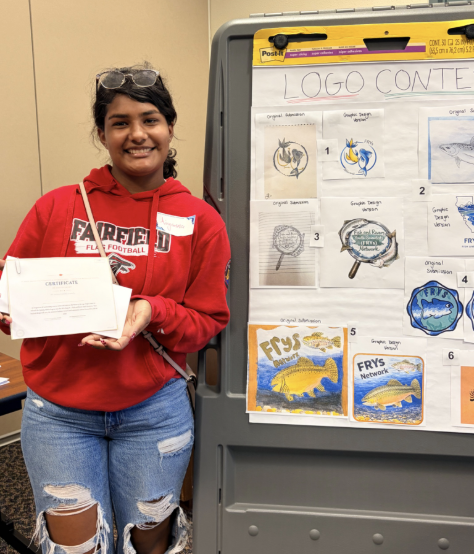 One student’s design was selected as
the winning logo and became part of this year’s showcase
materials. For Melody, the opportunity to contribute through art
felt deeply personal. “My grandmother always told me that I
should draw for people and always grab the opportunity to draw,”
she shared. “So when they first came to my classroom with the
prompt of wanting a new logo and wanting students to design it, I
gladly took the opportunity to create something for them.”
One student’s design was selected as
the winning logo and became part of this year’s showcase
materials. For Melody, the opportunity to contribute through art
felt deeply personal. “My grandmother always told me that I
should draw for people and always grab the opportunity to draw,”
she shared. “So when they first came to my classroom with the
prompt of wanting a new logo and wanting students to design it, I
gladly took the opportunity to create something for them.”
Her artwork reflected not only the environmental focus of the program, but also the creativity and perspective students bring to science spaces. “I love fish and I love drawing so this was perfect for me,” she explained.
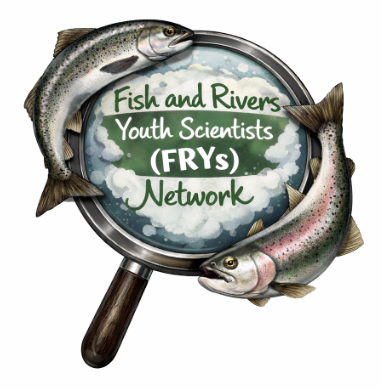 When Melody learned her design had
been selected, she said, “When they first announced me as the
winner of the logo contest, I was utterly in shock.” Beyond the
excitement of winning, the experience carried a deeper meaning
for her. “I knew that my grandma who inspired me to draw and do
drawings for others was looking down and smiling saying that
“that’s my girl.”
When Melody learned her design had
been selected, she said, “When they first announced me as the
winner of the logo contest, I was utterly in shock.” Beyond the
excitement of winning, the experience carried a deeper meaning
for her. “I knew that my grandma who inspired me to draw and do
drawings for others was looking down and smiling saying that
“that’s my girl.”
The logo contest became another reminder that participation in science can take many forms. Creating space for these different forms of expression helps students see that science communication is not limited to one format or one type of voice.
A Space That Keeps Growing
Last year’s showcase focused on creating that opportunity and building a space with students, centered around what would make them proud to share. This year, students show what can happen when that opportunity continues.
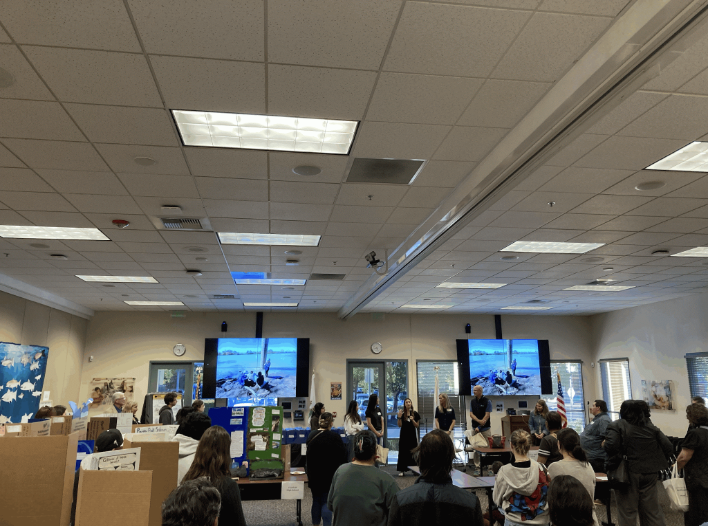 With returning students, increasing
family presence, and a growing sense of ownership, the showcase
is becoming more than a culminating event. It is a space where
students strengthen their confidence, deepen their connection to
science, and begin to see themselves as contributors to their
communities.
With returning students, increasing
family presence, and a growing sense of ownership, the showcase
is becoming more than a culminating event. It is a space where
students strengthen their confidence, deepen their connection to
science, and begin to see themselves as contributors to their
communities.
For these students, that shift is already underway. For the broader research team, which now also includes educators, it is a reminder that when students are given the space consistently, they do not just rise to the occasion. They grow into it. As the program continues to evolve into the FRYS Network, these student experiences will continue to shape what the network becomes and who it serves.