
What the 2026 Super Bowl Halftime Revealed About Civics Education
New Study Examines How U.S. Territory Teachers Confront Lack of Representation in the Classroom
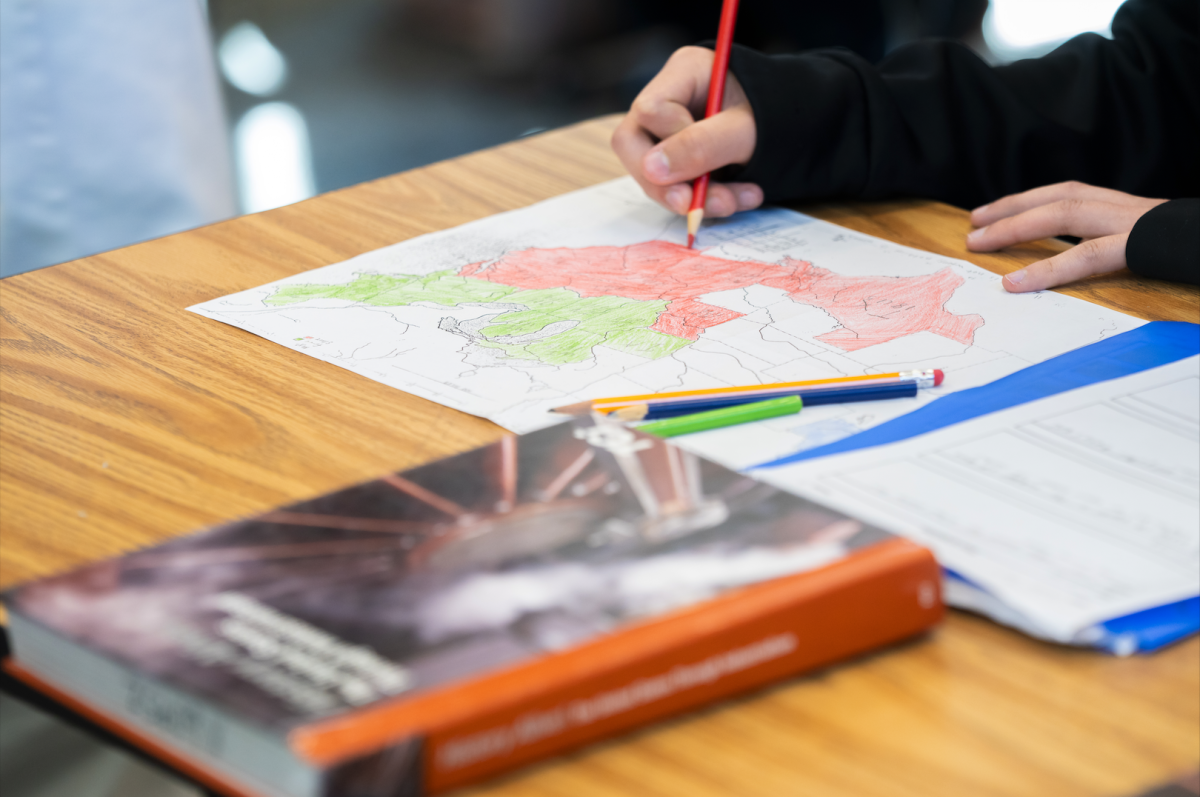
When Bad Bunny performed at the 2026 Super Bowl Halftime Show, he brought Puerto Rico and territorial citizenship to the forefront of national consciousness. As viewers across the country debated who and which regions count as American, they revealed a pervasive knowledge gap that begins in civics and history classrooms.
The five United States territories—Puerto Rico, Guam, American Samoa, the U.S. Virgin Islands, and the Northern Mariana Islands—are home to millions of people who live under U.S. governance or hold citizenship. Despite the important role that territories play in American civic life, their histories, political status, and civic engagement often go overlooked in K–12 classrooms.
Prof. Margarita Jimenez-Silva and her colleagues are committed to shifting how U.S. territories inform and are informed by the federal education system. In a recent study, they interviewed teachers in and from the territories to better understand how their history and civics classrooms are shaped by distinct cultural, linguistic, and geopolitical contexts.
The study highlights the daily realities teachers encounter when navigating an education system that doesn’t reflect their students’ lives. Jimenez-Silva and her co-authors Dr. Karen Guerrero (Arizona State University), Samuel Frances-Vazquez (Pensar Academy), Makatala Tanielu (Aua Elementary), Valerie Tanayan (Luis P. Untalan Middle School), Elizabeth Fuiava (Saddleback Elementary), and Tawn Hauptli (Mesa Community College) frame these teachers’ stories as important contributions to broader conversations about civic education.
“Their lived experiences provide essential insights into how national policies and dominant narratives impact local schools, students, and communities,” the authors write. “Highlighting these teachers’ voices disrupts longstanding silences, challenges misconceptions about territorial citizenship and identity, and brings to light innovative place-based pedagogies that address the civic and cultural needs of their learners.”
Insights from the Civics and History Classrooms
Using pláticas methodology, a discussion-based model centered on collaboration rather than data extraction, researchers and participants engaged in structured dialogue about their work as history and civics teachers. Across these conversations, three themes emerged:
Cultural Identity and Representation Matter
Participants described feeling that their students and communities were often positioned at the margins of mainstream curricula. Several teachers noted that territorial histories are treated as secondary rather than central to understanding the United States. One teacher shared, “Students need to know who they are in order to know where they’re going.”
For these educators, representation isn’t an abstract concept, but daily lived experience. To address curricular gaps, participants introduced local history and cultural knowledge to lessons, encouraging students to bring their unique skills and perspectives to bear on broader national narratives. “I always felt like our Samoan culture is very important,” another teacher explained. “I have a newfound purpose of trying to teach the students not only their culture, but connecting it through education, and how important it is to know their identity while navigating this world.”
Civic Engagement Works Best Off Book
Teachers also discussed the importance of helping students understand how the territories came to exist under U.S. governance and how that history continues to shape present-day conditions. “I’m teaching U.S. history according to the standards because it’s part of our curriculum,” said one teacher. “But the students need to know how and why the territories are part of the USA.”
While educators follow required standards, participants described extending lessons beyond textbook material to connect civic content to local realities. Some encouraged students to explore issues affecting their own communities and to engage with causes they care about. “[Students] started realizing they could actually make a difference,” a participant explained, “even when the system feels stacked against them.”
Mentorship Helps with Confronting Systemic Challenges
Participants spoke candidly about nearly leaving their teaching positions in early years, largely due to income levels, isolation, limited resources, and mental health challenges. “Mentorship emerged as a sustaining force and catalyst for leadership development,” said researchers, “offering not only guidance and technical support but also a sense of belonging within a profession marked by systemic challenges.”
Several teachers credited mentors with helping them remain in the field. Others discussed their efforts to build networks of support that allow educators in territorial contexts to share their experiences and strategies.
Why Territorial Voices Matter in Education
Study participants’ reflections illustrate how questions of citizenship and belonging arise daily in their classrooms. When territorial histories are minimized, students nationwide lack clarity about who is an American and how they can engage with the democratic process.
Jimenez-Silva and her colleagues’ study documents how teachers are addressing these gaps through local context, civic dialogue, and mutual support. By centering teachers’ perspectives, they argue that territorial educators are not peripheral to American civic education, but essential to understanding and broadening it. “Together,” researchers conclude, “the teachers’ voices call for systemic change that honors local histories, languages, and identities as essential to equitable and transformative civic education across the United States, including U.S. territories.”