
Ph.D. Student Rebecca VanArnam Named Environmental and Climate Justice Scholar
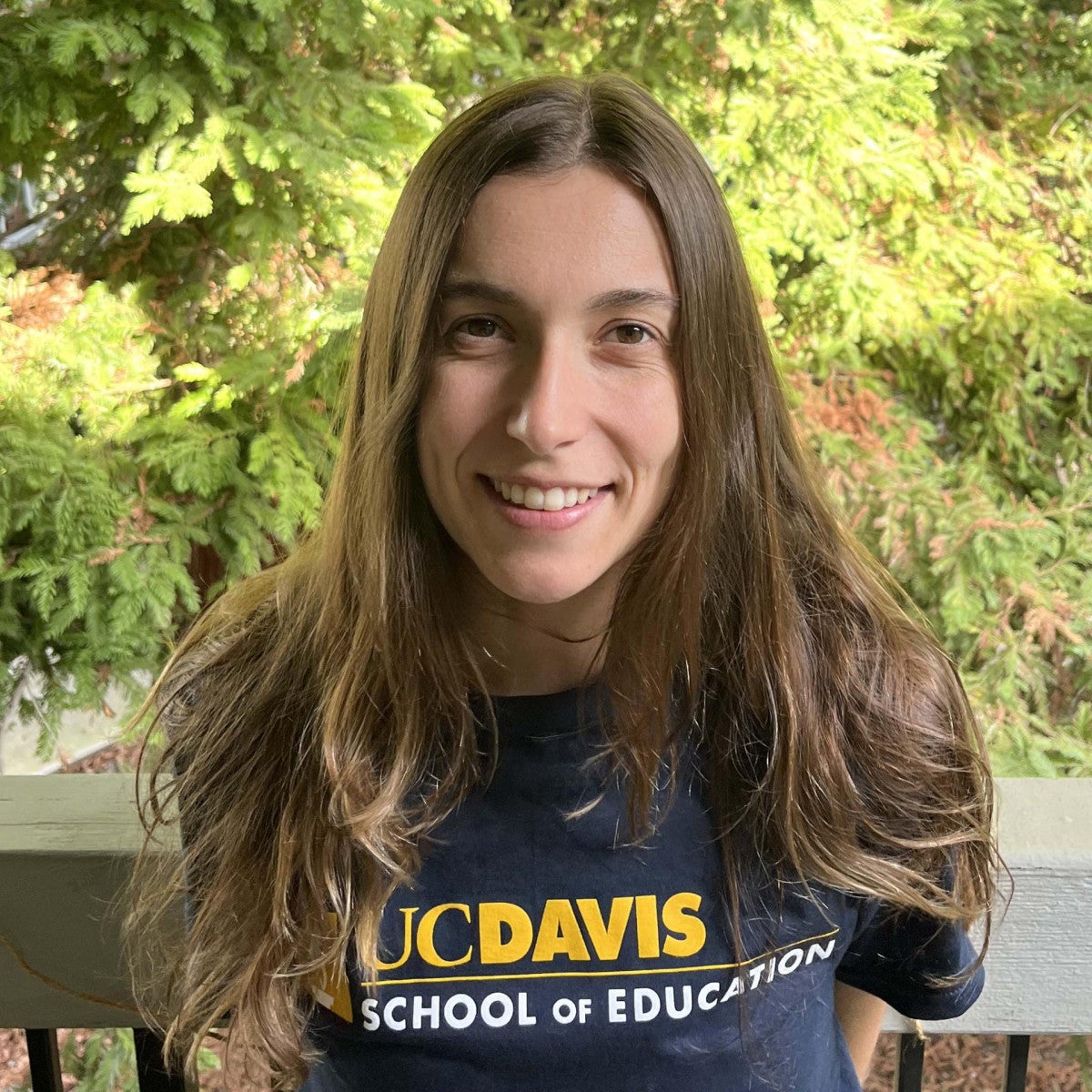 Ph.D. student Rebecca
VanArnam is one of eight graduate students selected as a
2025-26 UC Davis Institute of the
Environment Environmental and Climate Justice Scholars. She
joins academics and advocates across the university who will
conduct research that contributes to improving environmental
health and resolving environmental inequities.
Ph.D. student Rebecca
VanArnam is one of eight graduate students selected as a
2025-26 UC Davis Institute of the
Environment Environmental and Climate Justice Scholars. She
joins academics and advocates across the university who will
conduct research that contributes to improving environmental
health and resolving environmental inequities.
VanArnam will investigate the Spinning Salmon Program, a project that engaged K-12 youth in scientific research study over the course of five years. She will use $8,000 she received from the UC Davis Institute of the Environment and the Environmental and Climate Justice Hub to revise and implement an advocacy-focused curriculum that culminates in a student showcase. Key features of VanArnam’s study will include:
- Resource sharing to prepare students to present their research.
- Ongoing collaboration with teachers to ensure the project aligns with their classroom priorities.
- Teacher stipends for educators who are contributing additional time to implement the curriculum.
- A revised program plan that prioritizes students’ knowledge and their cultural and linguistic assets.
By developing a curriculum that centers youth stakeholders, VanArnam aims to strengthen participating students’ science identities, or: their sense of belonging in scientific settings. This is particularly important among young people who have been historically discouraged from participating in science. She also hopes to amplify youth voices in environmental justice efforts, positioning them as key contributors in future work to tackle the climate crisis.
Testing the Student Showcase Model
VanArnam spearheaded the first student showcase at the conclusion of the Spinning Salmon Program. With support from the Community and Citizen Science in Conservation Fellowship, VanArnam funded a showcase for Solano County students to share their experiences participating in real-world conservation efforts to protect local salmon. She also visited classrooms across Solano County to collaborate with students, discuss their ideas, and work with teachers to secure materials for the participants’ final projects.
Over 80 high schoolers, teachers, family members, and community stakeholders gathered in the Maine Prairie High School auditorium in Dixon, California to discuss what they learned from Spinning Salmon. They were encouraged to present their research using sculpture, dioramas, personal essays, and other multimedia formats to demonstrate the interdisciplinary nature of data collection. This was also an opportunity for them to experiment with methods for conveying academic research to a wider audience.
One class constructed papier-mâché salmon, using the project details such as the salmon size, paint colors, and body striping to reflect the data they had collected. Other students built models of the salmon life cycle, highlighting how their journey to a nesting spot can be disrupted by dams, flood plains, and other natural features.
“My primary goal was to create space for students to see themselves in science and this research—not just as participants, but leaders who can bring others in,” VanArnam said. “The showcase was one opportunity for them to share their work, communicate what matters to them, and demonstrate how inclusive, community-driven science can make an impact.”
VanArnam will continue to examine the effectiveness of the Spinning Salmon Program through a Delta Science Fellowship with California Sea Grant. The two-year fellowship, which ends in January 2027, will allow her to assess the program and develop and implement more culturally relevant content so that students feel empowered to leverage their knowledge sets and language skills when practicing science.
Making Science More Accessible
VanArnam received her bachelor’s degrees in marine science and biology and Spanish from University of Miami, where she served as a marine genomic research assistant and shark research and conservation intern. While she developed a strong passion for conservation work, she soon realized that science research often stays within academia and is rarely communicated to or includes the general public.
Seeking to increase engagement with and access to climate research—and encourage more people to take part in environmental justice efforts—VanArnam decided to pursue a doctorate in science education. “Everyone can serve as an environmental steward,” she said. “If we just change how we’re talking about research, and stop perpetuating the narrative that only certain people can do science, we can increase our momentum in tackling the climate crisis.”
Central to VanArnam’s doctoral research is culturally and linguistically sustaining science education. “Emergent bilingual students often have to do double the translating in a science classroom,” she said. “They have to translate complex terminology from English into their primary language and then tackle the concepts underlying it.” Building science curricula that prioritizes students’ unique background and perspectives will not only deepen their engagement in the classroom, bolster their science identities, but also bring forward perspectives that are essential for confronting today’s complex environmental issues.