
Moving Beyond Burnout
What Teachers Say They Need to Stay
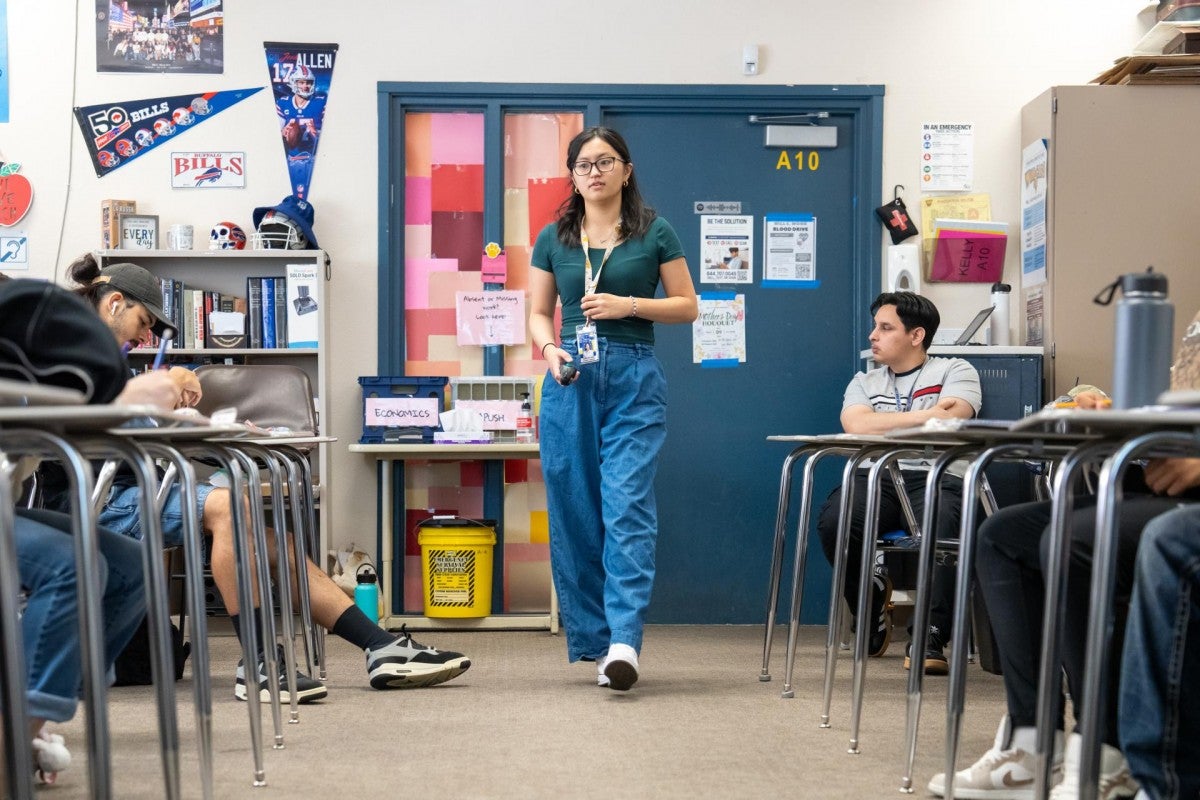
How can the education field better support teachers to build resilience and increase their career satisfaction? Prof. Margarita Jimenez-Silva and her colleagues Drs. Eleonora Villegas-Reimers and Janine Bempechat say it starts by listening to teachers.
The research team conducted a research study that asked instructors to share which kinds of opportunities and resources strengthened their commitment to teaching. But what Jimenez-Silva didn’t expect from this research study was how empowered the participants would become to continue the research on their own.
Two teachers joined Jimenez-Silva at the 2024 American Educational Research Association (AERA) Annual Meeting to present the study findings and have since gone on to pursue doctorates in education. Their goal is to keep working toward long-term solutions for teachers at all career stages.
“That’s the biggest success of this study: two teachers who are passionate and empowered to continue improving teaching for their colleagues,” said Jimenez-Silva. “That’s how change begins.”
Insights to Better Support Teachers
In their study, Jimenez-Silva and her co-researchers learned that
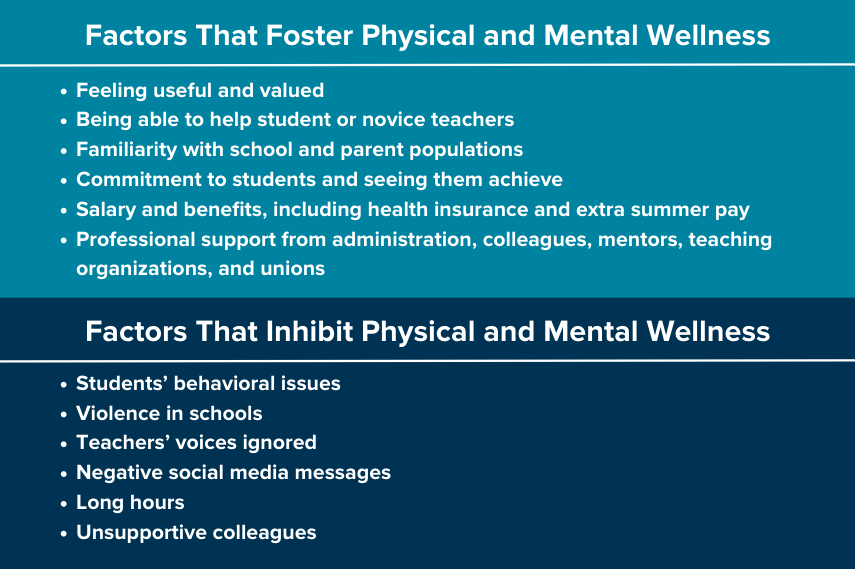
mental and physical wellness are a top priority for teachers.
Central to their sense of wellness was strong relationships—with
colleagues, administrators, and parents—as well as mentorship
opportunities and access to professional networks.
“Our conversations with the study participants often referenced how lonely teachers’ work can be,” the team wrote. “There’s a critical importance of breaking down the silos teachers often encounter within and across contexts.”
 Isolation looked different for
every teacher in the research study. For some, it was minimal
support from administrators or lackluster working conditions. For
others, it was unclear job responsibilities or challenging
assignments. One of the study participants even shared that she
dealt with rats in her classroom.
Isolation looked different for
every teacher in the research study. For some, it was minimal
support from administrators or lackluster working conditions. For
others, it was unclear job responsibilities or challenging
assignments. One of the study participants even shared that she
dealt with rats in her classroom.
When a teacher is confronted with limited opportunities to strengthen their support network, Jimenez-Silva and her colleagues recommend helping them advocate for themselves and their students’ needs. In an environment where there are limited resources or interpersonal connections, just vocalizing the challenges at hand can lead to small but meaningful change.
Finding Support Online
Jimenez-Silva and her co-researchers identified that one key
difference between novice and veteran teachers was their
perceptions of social media. While veteran teachers saw platforms
such as Facebook and Instagram as opportunities to widen their
professional networks, novice teachers saw them as vectors for
negative messages about teaching. In particular, TikTok and the
channel #teachertok invites K-12 instructors to weigh in on their
daily workloads, challenges in the classroom, and student
interactions. The prevailing message behind these videos?
Teaching isn’t worth it.
These messages, said Prof. Margarita Jimenez-Silva, can have a discouraging effect on educators. “They’re being judged for choosing to work in education,” she said, “as if it’s a thoughtless or reckless decision to make. It’s getting harder for teachers to avoid these messages.”
From Teacher Attrition to Resilience
Teachers are working under “an
unprecedented level of strain,” much of it intensified by the
long-term effects of COVID-19. With attrition rates continuing to
rise, Jimenez-Silva and her colleagues argue that it’s time to
move beyond studying the challenges and begin implementing
sustainable solutions.
By creating a safe and collaborative research study, Jimenez-Silva saw just how powerful teachers’ voices can be in building resilience. Even after the study concluded, the participants stayed in touch, building the support network they had been seeking in their own schools.
When teachers feel seen, heard, and supported, the impact echoes far beyond the classroom. As this study shows, solutions don’t always come from the top—they often start with teachers who are ready to transform the profession from within.
“The voices of teachers are too often missing from scholarship, policy, and school operations,” the research team wrote. “We need to educate the public about the complexity of teachers’ day-to-day lives—about the value and importance of teaching. The education field can achieve this by taking its lead from teachers and listening to their stories.”