
Triple Alumnus Returns to His Roots to Champion Future Teachers
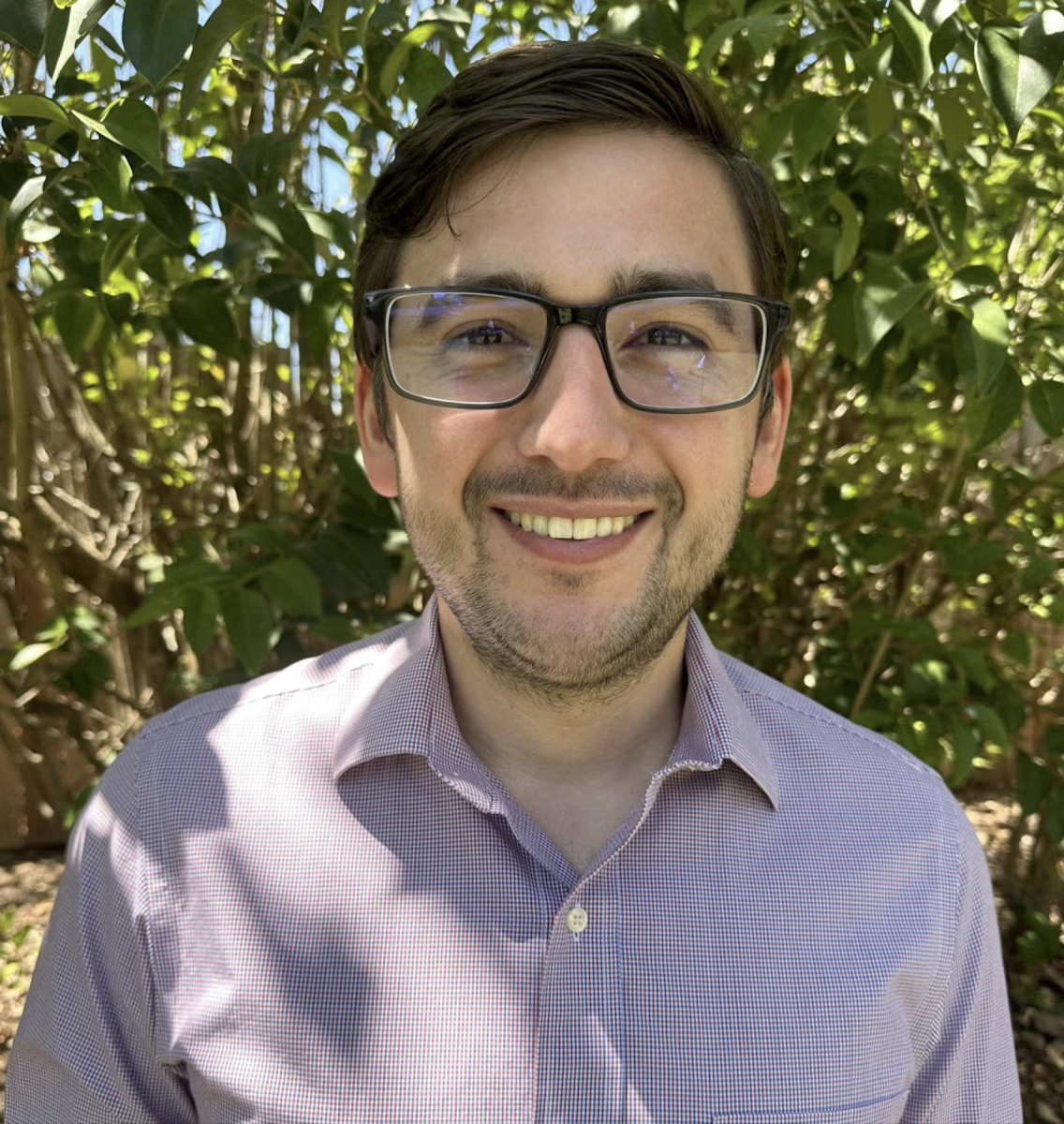 Andrew Hood, Cred. ’14, M.A.
’15, Ph.D. ’25, is dedicated to transforming the math classroom
for students and the teachers who lead them. As a UC Davis triple
alumnus who specializes in mathematics education, he has
committed over a decade of research and practice to building more
equitable learning outcomes.
Andrew Hood, Cred. ’14, M.A.
’15, Ph.D. ’25, is dedicated to transforming the math classroom
for students and the teachers who lead them. As a UC Davis triple
alumnus who specializes in mathematics education, he has
committed over a decade of research and practice to building more
equitable learning outcomes.
Now, Hood continues his work at the School of Education as a supervisor for the math credential cohort and program director of the Noyce Teaching Fellowship, a scholarship program that provides professional development opportunities to STEM credential candidates. In these roles, he hopes to empower the next generation of teachers to transform how students perceive, engage, and identify with math. “I want to help teachers change what people think about the math classroom and math itself,” said Hood. “A lot of issues we see—whether it’s anxiety about learning, feelings of not being smart enough, or marginalization because of the ways math has historically been taught—can be addressed by passionate teachers who expand notions of what math is and who can actually do it.”
Bridging Theory and Practice in Math Education
Hood’s commitment to reimagining the math classroom took shape during his doctoral studies, when he began examining mathematics teacher education and professional development through his dissertation research on supervisors. Supervisors play a critical role in credential candidates’ development, regularly observing them in the classroom and providing feedback that strengthens their teaching. Hood, who worked as a supervisor while in the Ph.D. program, recognized that they serve as bridges between theory and practice for credential candidates. Supervisors can help novice teachers apply equity concepts in their daily lessons, making inclusive math practices a foundational component of their pedagogy.
After learning more about the influence and the complexity of this role, Hood formed a supervisor network that met regularly to discuss the opportunities and challenges they encountered with credential candidates. “There’s a lot of work on how to center justice, diversity, and equity in the classroom, and how teachers can acknowledge and recognize these things in themselves,” he said. “But a lot of that scholarship doesn’t actually make it to practice. We as supervisors have to grapple with this disconnect, determining how we can best talk to candidates about what we’re seeing in the classroom and still support them with specific issues they’re facing.”
Hood’s advisor, Prof. Rebecca Ambrose, also encouraged him to participate in the Supervisors of Teacher Education Network Team, which she co-led with Dr. Lisa Sullivan and California-based researchers. As a network member, he supported the team in analyzing supervisor data, co-publishing research on teacher educator professional learning, and presenting insights at the California Council on Teacher Education fall conference. All of these experiences solidified Hood’s desire to serve supervisors and teachers in becoming confident educators capable of transforming mathematics from within the profession.
Leading with Equity, Empathy, and Community
Hood’s positions as an educator and a researcher continue to inform his current work, particularly in his daily interactions with credential candidates. “So much of what I see reminds me of my own experiences,” he said. “I understand what they’re going through, and that helps me deliver feedback with empathy.”
When collaborating with student teachers, Hood aims to show them how they can bring equity and inclusion into their existing math lessons without feeling like they have to sacrifice one over the other. “There doesn’t have to be a binary,” he said. “Say there’s a student who’s not engaging with the lesson and also being marginalized by that experience. Most of the time, there’s a way for teachers to address both problems simultaneously. You reengage a student by noticing and removing the systemic barriers that are impacting them.”
Hood knows that building this kind of classroom change is not something teachers do alone. Just as he encourages candidates to seek collaborative solutions in their schools and within the credential program, he has found his own support system at UC Davis. Returning to the School of Education has allowed him to move from student to colleague within a community that shares his commitment to equity-centered mathematics instruction.
Surrounded by mentors, fellow supervisors, and emerging educators invested in reimagining what math learning can look like, Hood sees his work as part of a larger, collective effort. “I feel privileged to be in my position,” he shared. “I had this goal to be a math teacher and then to work in teacher education. I’ve been able to accomplish both those things, and all while being supported by people who care so much about the same things I do.”