
Noticing What Counts: Rethinking Literacy in Classrooms
 In an elementary science classroom,
students compare a soaked lima bean with a dried one. When asked
what could be happening to the beans, one child reaches for the
familiar term “photosynthesis,” and the room nods in agreement.
But when asked what the word means, the class falls silent,
unsure of how to define the process.
In an elementary science classroom,
students compare a soaked lima bean with a dried one. When asked
what could be happening to the beans, one child reaches for the
familiar term “photosynthesis,” and the room nods in agreement.
But when asked what the word means, the class falls silent,
unsure of how to define the process.
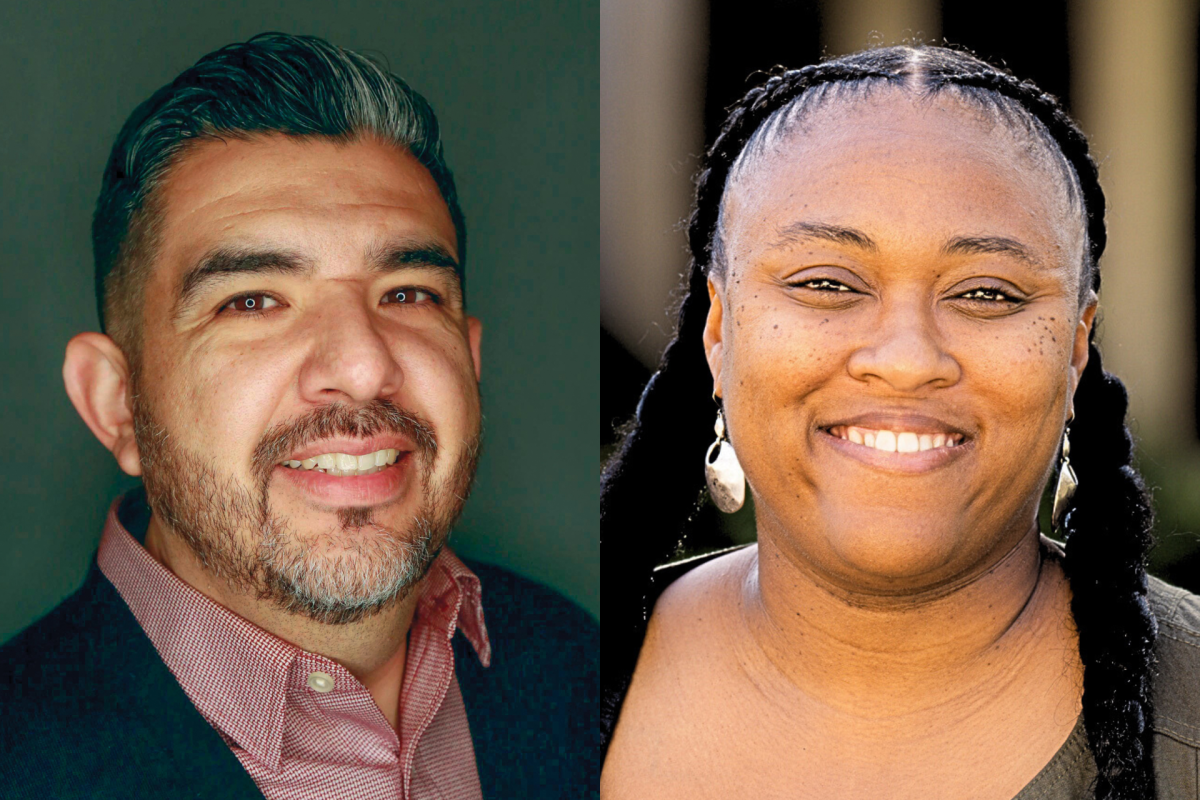
UC Davis School of Education Profs. Danny C. Martinez and Alexis Patterson Williams explore the tensions embedded in how disciplinary literacy is defined and enacted in their new book chapter “Noticing for Equity in Disciplinary Literacy Instruction.” The chapter examines how teachers, particularly in science and English language arts, navigate competing commitments to disciplinary norms while working to recognize and sustain students’ diverse communicative and cultural repertoires.
Martinez, who specializes in language, literacy, and culture, and Patterson Williams, who researches literacy in science education, emphasize the critical importance of practicing “teacher noticing for equity,” a conceptual approach that helps educators self-reflect when addressing classroom interactions, interpreting student thinking, and determining how to best respond to both factors.
Noticing helps teachers see literacy as it unfolds, recognizing how students make meaning beyond the traditional markers of reading and writing. In doing so, they make disciplinary vocabulary and course content more accessible to all students, while simultaneously redefining what counts as literacy in educational spaces.
When Literacy Becomes Vocabulary
In science education, literacy is often equated with mastering specialized terminology. “There’s an over-focus on science vocabulary as the way that literacy plays out in science classrooms,” said Patterson Williams. As a result, teachers may ground instruction on “vocabulary and vocabulary alone,” even when students are still developing conceptual understanding.
This focus can be misleading. “A child can hide behind the vocabulary, because it signals that they’ve absorbed at least part of the lesson,” Patterson Williams said. “There’s power in using scientific terminology.” Some students may be celebrated for using technical jargon fluently—even if they don’t understand the ideas those words represent—while others may demonstrate strong reasoning using informal explanations but receive less recognition for doing it.
Martinez sees this disconnect between vocabulary and comprehension as representative of a larger pattern in education. In literacy research, he explained, definitions of what counts as “literate” have historically prioritized standardized reading and writing over other ways of communicating meaning. When teachers treat formal academic language as the primary indicator of learning, it can “overlook groups that are already stigmatized and marginalized,” especially when students’ home and community practices differ from dominant expectations.
In science classrooms, students often reason through conversation, drawing, and modeling before they articulate their ideas in technical terms. These forms of meaning-making are central to learning, but aren’t always recognized as legitimate literacy practices, and are frequently associated with people from communities whose linguistic practices have historically been undervalued in school settings.
Expanding what counts as literacy allows teachers to recognize a wider range of intellectual work. Noticing becomes a way to shine a light on student learning that might otherwise go unseen, supporting more inclusive participation and more accurate instructional decisions.
What Becomes Possible When Teachers Notice
 Noticing for equity empowers
teachers to identify and address impactful literacy moments, even
when they’re responding to input from 30 students at one time.
Depending on how a child is processing information, the teacher
can choose to follow their reasoning in one-on-one conversation,
invite other students to build on the idea, or delay correction
to allow understanding to develop.
Noticing for equity empowers
teachers to identify and address impactful literacy moments, even
when they’re responding to input from 30 students at one time.
Depending on how a child is processing information, the teacher
can choose to follow their reasoning in one-on-one conversation,
invite other students to build on the idea, or delay correction
to allow understanding to develop.
Martinez notes that one small way teachers can begin practicing noticing for equity is by paying attention to when and how they contribute to student discussions. During his research, Martinez observed Mr. Michelson, a language arts teacher who used to interrupt group work and finish students’ sentences. “Mr. Michelson had to learn how to be quiet, and listen” Martinez said. “When he moved to the periphery of the classroom and just listened, he heard his students drawing on translanguaging practices. Standing back from discussion took the pressure off his students to perform their knowledge rather than understand it.” Over time, decisions like Mr. Michelson’s can reshape classroom dynamics. Students whose ideas are recognized, using the languages they are most comfortable with, are more likely to see themselves as capable participants.
Noticing for equity can also relieve some of the pressure teachers feel to be subject matter experts. In a science classroom, a teacher may feel intimidated to address topics they don’t fully comprehend. But as Patterson Williams explains, “Part of noticing for equity is disrupting the idea that a scientist has to know all the answers. It creates space for teachers to say ‘I don’t know, but we can figure this out together.’”
Expanding Literacy, Strengthening Learning
Martinez and Patterson Williams aren’t arguing for abandoning academic rigor. Precision, clarity, and disciplinary conventions remain important goals. Instead, their work reframes when and how those goals are pursued. By attending first to meaning and sense-making, teachers can more thoughtfully guide students to adding literacy practices aligned with each discipline to their overall repertoire of communicative practices, and without treating academic language as the only legitimate evidence of understanding.
Noticing for equity also holds broader implications for education. When students’ thinking is taken seriously, they are more likely to experience a sense of efficacy and belonging in learning spaces. Noticing becomes a way of interrupting structural patterns that have historically limited who is seen as knowledgeable in classrooms. “There’s a lot at stake when we don’t notice for equity,” said Patterson Williams. “It’s not the silver bullet, but it’s one way to acknowledge our students’ brilliance and help them feel part of a learning community. And isn’t that the ultimate goal of being a teacher?”