
Waste Audit Brings Science to Life
UC Davis Partnership Shows Students How Everyday Choices Make a Big Difference
 At Marguerite Montgomery Elementary
School, the lunchroom has become an unexpected site for science
learning. A waste audit and lesson series led by parent
volunteers and UC Davis School of Education graduate students is
helping children examine how their daily food and disposal
choices affect the environment. By pairing hands-on investigation
with culturally responsive teaching, the program teaches students
how to sort waste and reduce food loss, encouraging them to
identify as environmental stewards who can bring these lessons
home to their families and communities.
At Marguerite Montgomery Elementary
School, the lunchroom has become an unexpected site for science
learning. A waste audit and lesson series led by parent
volunteers and UC Davis School of Education graduate students is
helping children examine how their daily food and disposal
choices affect the environment. By pairing hands-on investigation
with culturally responsive teaching, the program teaches students
how to sort waste and reduce food loss, encouraging them to
identify as environmental stewards who can bring these lessons
home to their families and communities.
Bringing Climate Stewardship to the Lunchtable
María José Godoy, a UC Davis alumna who holds her master’s degree in International Agricultural Development, and a small group of parents started the Waste Management Education Program in September 2024 with the initial goal to teach students how to properly sort their waste. During lunchtime, they noticed that the children often mixed up their trash, contaminating recycling and compost that could otherwise be repurposed. To address the issue, and build students’ sense of responsibility for their school community, they began attending lunch and helping children sort their trash into the correct bins. Students quickly learned how to separate their recycling and food scraps and recognize when they could save food for later, take it home, or share it with a peer instead of throwing it away.
However, Godoy and the other parents soon saw that sorting assistance wasn’t enough. Students were still leaving trash on the ground and throwing away full cartons of milk and untouched apples. “We recognized that we needed a systemic approach,” Godoy said. “We wanted to educate the kids and change the school culture. By making the waste audit more fun for the kids, and empowering them to take action in their own way, we could change behavior on a bigger scale.”
To take the next step, Godoy contacted School of Education Ph.D. student Becca VanArnam to help develop a curriculum that would make the program more meaningful and applicable to the students’ daily lives. “I was researching Next Generation Science Standards, and saw that there’s a big section on human impact,” said Godoy. “I realized that we have a lunchtime laboratory where kids could learn about their direct influence on the environment every day.”
STEM Education Grounded in Personal Identity
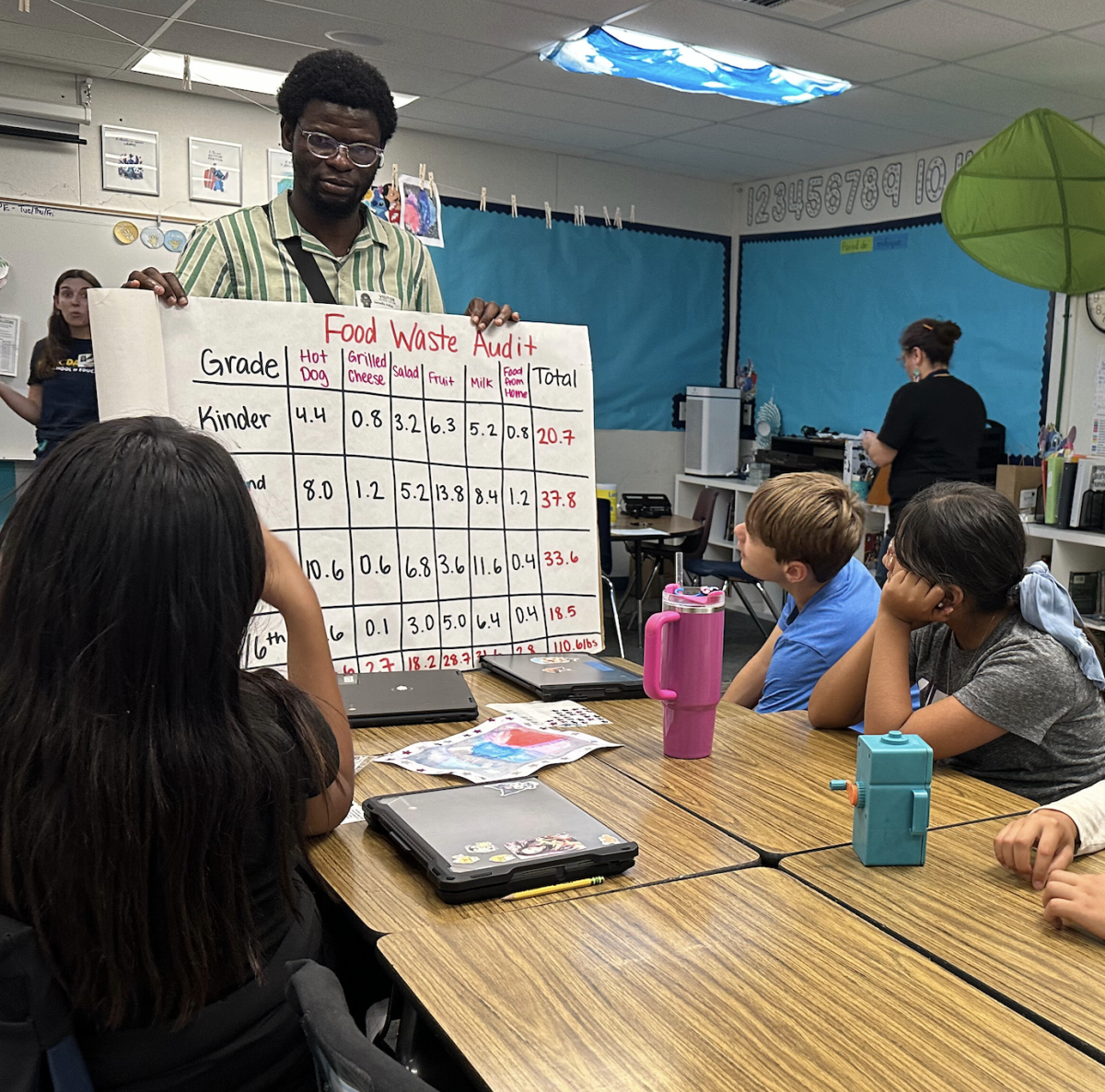 Godoy’s timing couldn’t have been
better. VanArnam, along with School of Education Ph.D.
student Caitlyn Ishaq and
French and Francophone Studies Ph.D. student Oluwadamilare
Adisa, were enrolled in Prof. Margarita
Jimenez-Silva’s graduate EDU 244 class “Critical Perspectives
on Cultural and Linguistic Representation in STEM-themed
Children’s and Adolescent Books.” The group saw an opportunity to
integrate Rainbow Weaver/Tejedora del arcoíris, a bilingual,
multicultural picture book about recycling, into a three-part
bilingual lesson series that combined science, math, and language
arts with environmental stewardship.
Godoy’s timing couldn’t have been
better. VanArnam, along with School of Education Ph.D.
student Caitlyn Ishaq and
French and Francophone Studies Ph.D. student Oluwadamilare
Adisa, were enrolled in Prof. Margarita
Jimenez-Silva’s graduate EDU 244 class “Critical Perspectives
on Cultural and Linguistic Representation in STEM-themed
Children’s and Adolescent Books.” The group saw an opportunity to
integrate Rainbow Weaver/Tejedora del arcoíris, a bilingual,
multicultural picture book about recycling, into a three-part
bilingual lesson series that combined science, math, and language
arts with environmental stewardship.
To ensure that the lessons registered with learners, Ishaq, VanArnam, and Adisa grounded their work in culturally responsive teaching, a pedagogical approach that centers students’ cultural knowledge and lived experiences as assets in their learning. “As students explore how waste is handled in their own homes and communities, they notice how cultural practices shape what they throw away,” the team explained. “They see that their everyday choices aren’t just personal, but part of a bigger story about how we care for the Earth.”
This approach also helped make climate change feel less abstract. “It really helps kids think about the question ‘How does this affect me, and why is it something I should care about?’” said Ishaq. Lessons were delivered bilingually, allowing students to engage with science concepts in both English and Spanish while drawing connections to practices and conversations happening at home.
The team had a second motivation for centering culture in lessons: strengthening students’ confidence and sense of belonging in science. “In higher levels of education, there typically tends to be less BIPOC representation, especially in STEM fields,” said VanArnam. “Showing students that their cultures and languages are important to science, and that they do not need to change themselves to participate, is one way that we can inspire and empower them to continue engaging with it.”
Small, Teachable Moments Making a Big Impact
Ishaq, VanArnam, and Adisa piloted the lesson series in both a first- and fifth-grade Spanish immersion classroom, culminating in a school-wide waste audit. Over the course of one lunch period, parent and student volunteers helped children separate and weigh the leftover food and trash, sorting items into garbage, recycling, and compost bins. The volunteers also interviewed participants about the food they chose not to eat and why they made the decision to throw it away. To demonstrate their learning, students then created visual or multimedia projects designed to educate peers and family members about reducing food waste.
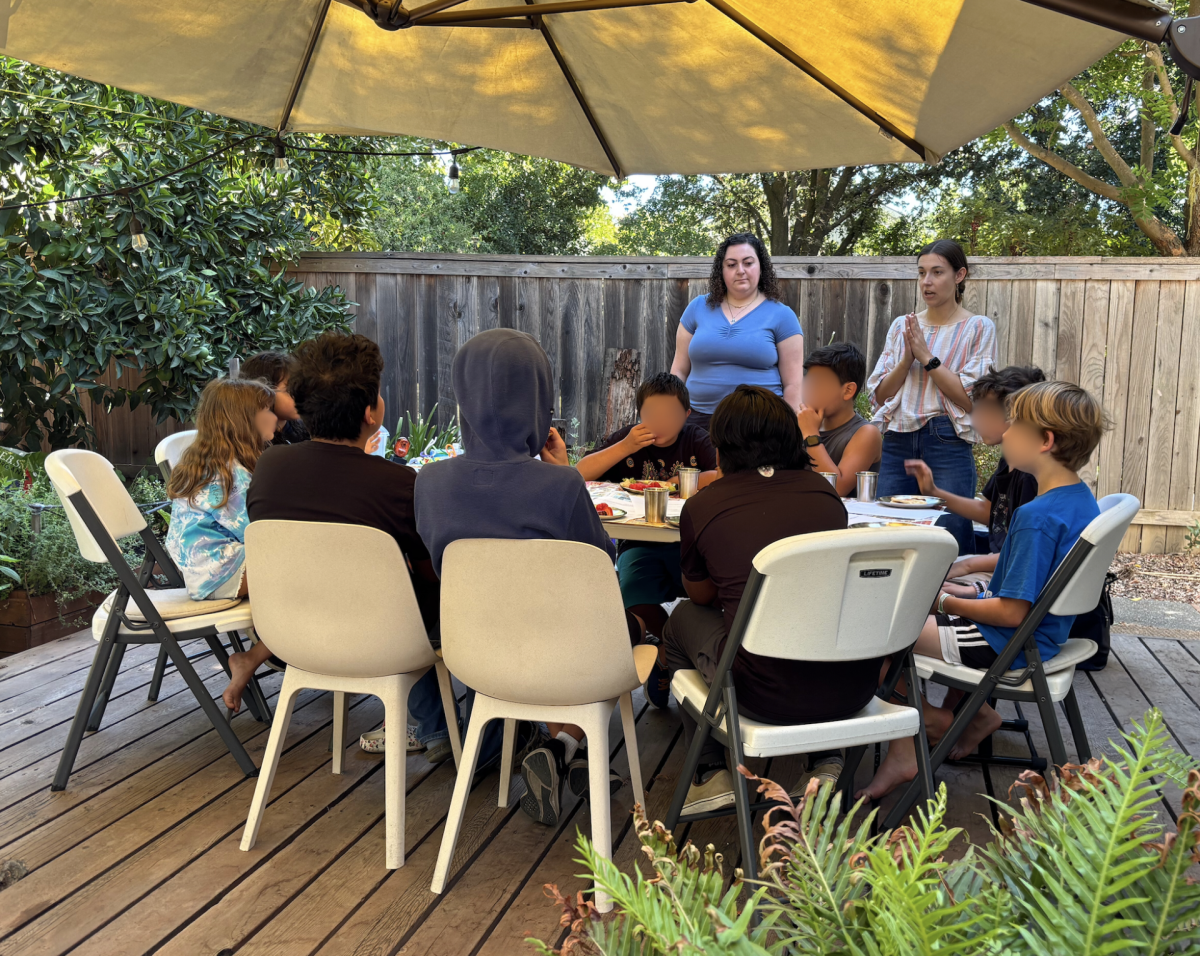 Teachers, parent volunteers, and
the UC Davis team were excited to see how quickly students’
understanding deepened. One fifth-grader observed that fruits
like bananas and apples come in a natural “package”—their
skin—which makes them sturdy enough to last all day in a
backpack. Rather than throwing the fruit away, he realized he
could take it home to eat later. “This was just a fifth-grade
student thinking out loud,” said VanArnam. “And yet it was so
exciting to hear him brainstorming how he could change his habits
in small ways.”
Teachers, parent volunteers, and
the UC Davis team were excited to see how quickly students’
understanding deepened. One fifth-grader observed that fruits
like bananas and apples come in a natural “package”—their
skin—which makes them sturdy enough to last all day in a
backpack. Rather than throwing the fruit away, he realized he
could take it home to eat later. “This was just a fifth-grade
student thinking out loud,” said VanArnam. “And yet it was so
exciting to hear him brainstorming how he could change his habits
in small ways.”
While only two classes have participated in the lesson series so far, Godoy and the other volunteers are beginning to see a ripple effect across the school. In fact, the parents and students conducted a second waste audit later in the year, reflecting a growing, school-wide interest in the program beyond the initial participants. “The kids are very willing to do this work,” Godoy said. “They’re happy to help with the waste audit, and they’re eager for more meaningful experiences where they can be useful to their community.”
The Ripple Effect of Community-Driven Learning
Both the UC Davis students and parent volunteers plan to continue building momentum behind the Waste Management Education Program. But as Godoy emphasized, the outcomes they’re working toward will take time. “If you have an elementary schooler learn about food waste and explain why it’s important, they will go home and teach their parents—and then their community,” she said. “You’re creating the next generation of climate stewards. But that takes a long-term commitment to creating more opportunities for them to learn, feel inspired, and do the right thing.”
No matter how the program evolves, collaboration will remain central to the work. “We did a lot of listening to parent volunteers, students, and teachers to address all their goals in a useful way,” Ishaq said. “We want this project to continue addressing their needs, not offer a quick fix.” VanArnam emphasized: “This kind of work calls for putting community first.”
“I’m very grateful to the School of Education team,” said Godoy, “because their contribution reminds me that we parents aren’t alone: there are more people working to support our kids and their futures.”