
Journaling About Nature and Nurturing STEM
UC Davis Student Group Hermanas Escritoras Lead Fifth Graders in Science Writing

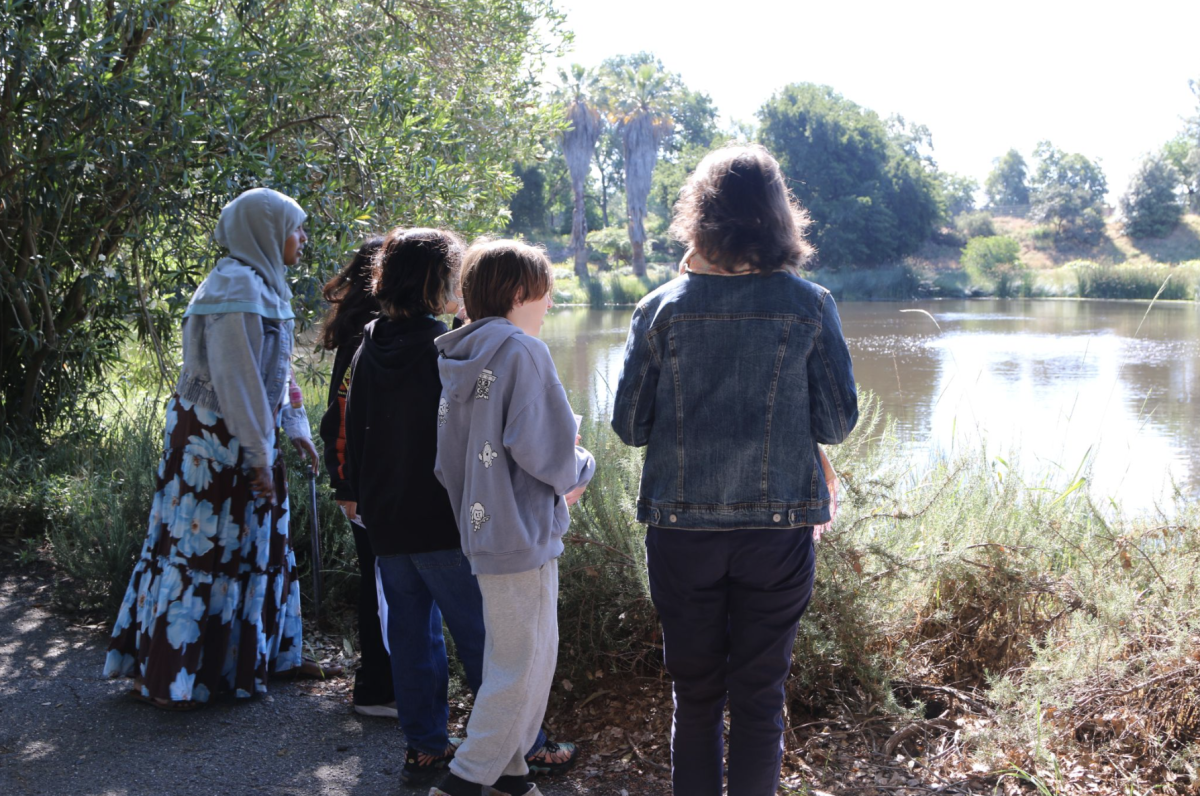
Hermanas Escritoras is a women-led, intergenerational student organization at UC Davis that’s dedicated to bringing full, authentic identities into science writing. Founded in Spring 2024 by a group Chicana/Latina STEM students, the group sought to build community and create space to explore the intersection of science writing, storytelling, art, and lived experience. That mission shaped a recent collaboration with fifth grade students from Marguerite Montgomery Elementary School, who visited the UC Davis Arboretum for a nature journaling activity centered on science and self-expression.
 Facilitating the experience were
Anna Peñaloza, a
Ph.D. candidate in Education; Hannah Kwok, a third-year Landscape
Architecture major; Aylin Andrade, a third-year Mathematics major
minoring in Education; Eimy Niño, a fourth-year Environmental
Science major; and Tadeh Issaian, a Ph.D. candidate in
Agricultural Chemistry. Hannah Kwok played a pivotal role in
designing the activity materials and map sequence to ensure a
creative and engaging experience. Through observation, writing,
and drawing activities, the program encouraged the elementary
school students to see science not only as academic content, but
as an outlet connected to their identities and creative
expressions.
Facilitating the experience were
Anna Peñaloza, a
Ph.D. candidate in Education; Hannah Kwok, a third-year Landscape
Architecture major; Aylin Andrade, a third-year Mathematics major
minoring in Education; Eimy Niño, a fourth-year Environmental
Science major; and Tadeh Issaian, a Ph.D. candidate in
Agricultural Chemistry. Hannah Kwok played a pivotal role in
designing the activity materials and map sequence to ensure a
creative and engaging experience. Through observation, writing,
and drawing activities, the program encouraged the elementary
school students to see science not only as academic content, but
as an outlet connected to their identities and creative
expressions.
Building Science Writer Identities
 Hermanas Escritoras’
collaboration with Marguerite Montgomery stemmed from co-founder
Anna Peñaloza’s dissertation research. Her work explores the
emerging science writer identities of Chicana/Latinas in STEM and
examines how traditional scientific discourse often overlooks
personal, emotional, and cultural identities.
Hermanas Escritoras’
collaboration with Marguerite Montgomery stemmed from co-founder
Anna Peñaloza’s dissertation research. Her work explores the
emerging science writer identities of Chicana/Latinas in STEM and
examines how traditional scientific discourse often overlooks
personal, emotional, and cultural identities.
Drawing from autohistorias, pláticas, and artwork, Peñaloza’s research has found that many Chicana/Latinas in STEM struggle to claim a science writer identity because traditional discourse frequently erases their cultural identities and experiences. However, within community spaces that encourage dialogue and reflection, the women challenge dominant science language ideologies and redefine what it means to be a scientist. In doing so, they negotiate empowered, hybrid science writer identities for themselves.
A Collaboration Rooted in Community
 Peñaloza’s research also informed
the partnership behind the journaling activity itself.
Hermanas Escritoras’ collaboration grew out of
conversations between Peñaloza and her mother, Maestra Ana
Peñaloza, a fifth-grade educator at Marguerite Montgomery
Elementary School with an interest in STEAM education.
Peñaloza’s research also informed
the partnership behind the journaling activity itself.
Hermanas Escritoras’ collaboration grew out of
conversations between Peñaloza and her mother, Maestra Ana
Peñaloza, a fifth-grade educator at Marguerite Montgomery
Elementary School with an interest in STEAM education.
Together, Hermanas Escritoras envisioned an activity that would help students connect science and art while encouraging curiosity, creativity, and confidence in scientific learning. “I want my students to connect and understand the sciences with the arts at an early age, so they can have love for nature and their identities,” Maestra Peñaloza said. Her colleague Maestro Daniel Lemes, his fifth-grade students, paraeducators, parents, and guardians also participated in the program.
Nature Journaling at the UC Davis Arboretum
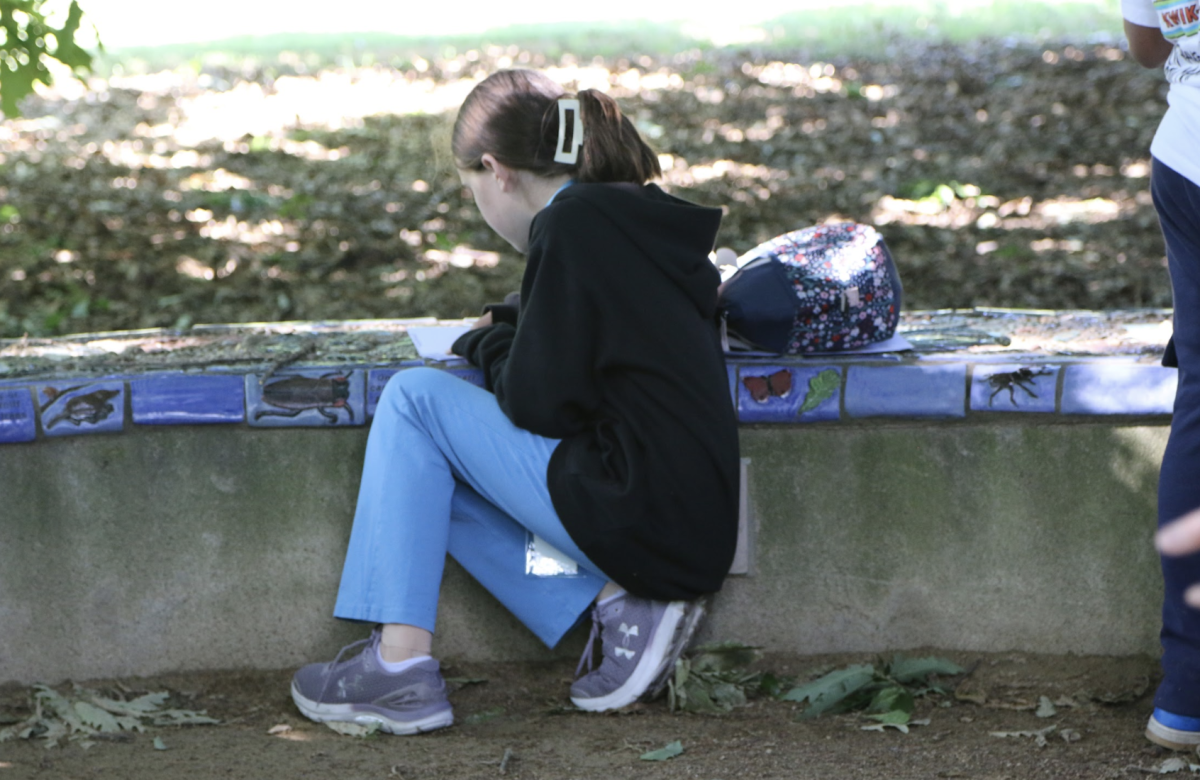
 To bring the Hermanas Escritoras’
ideas into practice, students explored the Arboretum through
nature journaling, a practice that combines multiple modes of
communication—including words, pictures, and numbers—to collect
and record observations, questions, connections, and explanations
in a notebook. Often conducted in real-world settings, nature
journaling encourages participants to engage authentically with
the environment around them while exploring their own
perspectives and curiosities.
To bring the Hermanas Escritoras’
ideas into practice, students explored the Arboretum through
nature journaling, a practice that combines multiple modes of
communication—including words, pictures, and numbers—to collect
and record observations, questions, connections, and explanations
in a notebook. Often conducted in real-world settings, nature
journaling encourages participants to engage authentically with
the environment around them while exploring their own
perspectives and curiosities.
Niño explained, “Journaling doesn’t have limits; it’s about the willingness to express themselves in whatever way they feel more comfortable.” By combining scientific observation with creativity and reflection, the experience encouraged students to see science as both accessible and personally meaningful.
To guide students through the Arboretum visit, organizers developed interactive materials that encouraged observation and engagement with the surrounding landscape. These activities enhanced observational and sensory skills, enabling students to reflect on environmental factors and capture findings with drawing as a creative expression. Kwok developed an activity program for the event, drawing from her landscape representation courses to create a hand-folded nature journal booklet and a walking route map.
 As students moved through the
Arboretum, Hermanas Escritoras members led them in
conversations and activities focused on nature, science, and
self-expression. Andrade and Niño both reflected on the
enthusiasm the fifth graders demonstrated throughout the
experience. “As a future educator it was fun to see how the
students used the information they learned in class to discuss
the different plants and flowers they were drawing,” Andrade
said.
As students moved through the
Arboretum, Hermanas Escritoras members led them in
conversations and activities focused on nature, science, and
self-expression. Andrade and Niño both reflected on the
enthusiasm the fifth graders demonstrated throughout the
experience. “As a future educator it was fun to see how the
students used the information they learned in class to discuss
the different plants and flowers they were drawing,” Andrade
said.
“Seeing the students so excited, drawing, walking around, observing, and asking questions about the Arboretum was awesome,” said “Niño. “They had the opportunity to learn outside the classroom and realized how these experiences can be gratifying.”
Looking Ahead
 The Arboretum collaboration
reflects the larger direction of Hermanas Escritoras’
outreach, curriculum development, and public programming. To
date, the organization has partnered with first-year composition
graduate student instructors from the Writing Education, Love,
and Liberation (WELL) group to develop curricula centered on the
lived experiences and languages of minoritized writers. It also
hosted several campus-wide workshops that merge the arts with
science writing.
The Arboretum collaboration
reflects the larger direction of Hermanas Escritoras’
outreach, curriculum development, and public programming. To
date, the organization has partnered with first-year composition
graduate student instructors from the Writing Education, Love,
and Liberation (WELL) group to develop curricula centered on the
lived experiences and languages of minoritized writers. It also
hosted several campus-wide workshops that merge the arts with
science writing.
 For Peñaloza, the Marguerite
Montgomery collaboration represented both a community partnership
and an opportunity to support future generations of scientists
and science writers. “Working with my mom and bringing this
activity to her students brings my own writing journey full
circle,” Peñaloza said. “My identity as a writer is intertwined
with my mom’s stories, struggles, and resistance as a writer. I
also reflect on the importance of early science identity
development, as I first became interested in science around fifth
grade. I see the work we do with Hermanas Escritoras as
empowering future generations of scientists and science writers.”
For Peñaloza, the Marguerite
Montgomery collaboration represented both a community partnership
and an opportunity to support future generations of scientists
and science writers. “Working with my mom and bringing this
activity to her students brings my own writing journey full
circle,” Peñaloza said. “My identity as a writer is intertwined
with my mom’s stories, struggles, and resistance as a writer. I
also reflect on the importance of early science identity
development, as I first became interested in science around fifth
grade. I see the work we do with Hermanas Escritoras as
empowering future generations of scientists and science writers.”
To stay connected, join the group, or attend future nature journaling activities, follow Hermanas Escritoras on Instagram or contact hermanasescritoras@gmail.com.