
Field Trip to Rush Ranch
Exploring Estuaries, Science, and Language
Authors: Peggy Harte, Becca VanArnam, Kimberly Renae Evans, Carly Davis
 A few weeks ago, a group of high
school students participating in the Spinning Salmon Program
ventured out to explore tidal marshes and grasslands at a local
jewel- Solano Land Trust’s Rush Ranch. Rush Ranch is a beautiful
preserve managed by the Solano Land Trust that protects one of
California’s largest brackish marsh ecosystems. Here, students
got a chance to learn more about current ecological research
taking place, connecting their classroom learning with the living
landscape of Suisun Marsh.
A few weeks ago, a group of high
school students participating in the Spinning Salmon Program
ventured out to explore tidal marshes and grasslands at a local
jewel- Solano Land Trust’s Rush Ranch. Rush Ranch is a beautiful
preserve managed by the Solano Land Trust that protects one of
California’s largest brackish marsh ecosystems. Here, students
got a chance to learn more about current ecological research
taking place, connecting their classroom learning with the living
landscape of Suisun Marsh.
This group of students are unique for a few reasons. In addition to participating in the salmon monitoring research project for the last few years, their primary language is ASL, they’ve experienced severe language depreciation, and they’ve lacked access to education until beginning high school. These shared experiences makes participation in the Spinning Salmon Program even more impactful because they are able to see and engage in science in a meaningful way that learning from a textbook in their second language (written English) simply can’t provide.
 What made this field trip truly
inspiring was the presence of researcher Kimberly Evans, a
current grad student at UC Davis who, in addition to knowing a
lot about salmon biology (a key topic of interest to the
students) is also conversationally adept in American Sign
Language (ASL). Kimberly’s presence on this field trip, and her
ongoing collaboration with this particular group of students,
ensured that every student could fully participate in the
experience.
What made this field trip truly
inspiring was the presence of researcher Kimberly Evans, a
current grad student at UC Davis who, in addition to knowing a
lot about salmon biology (a key topic of interest to the
students) is also conversationally adept in American Sign
Language (ASL). Kimberly’s presence on this field trip, and her
ongoing collaboration with this particular group of students,
ensured that every student could fully participate in the
experience.
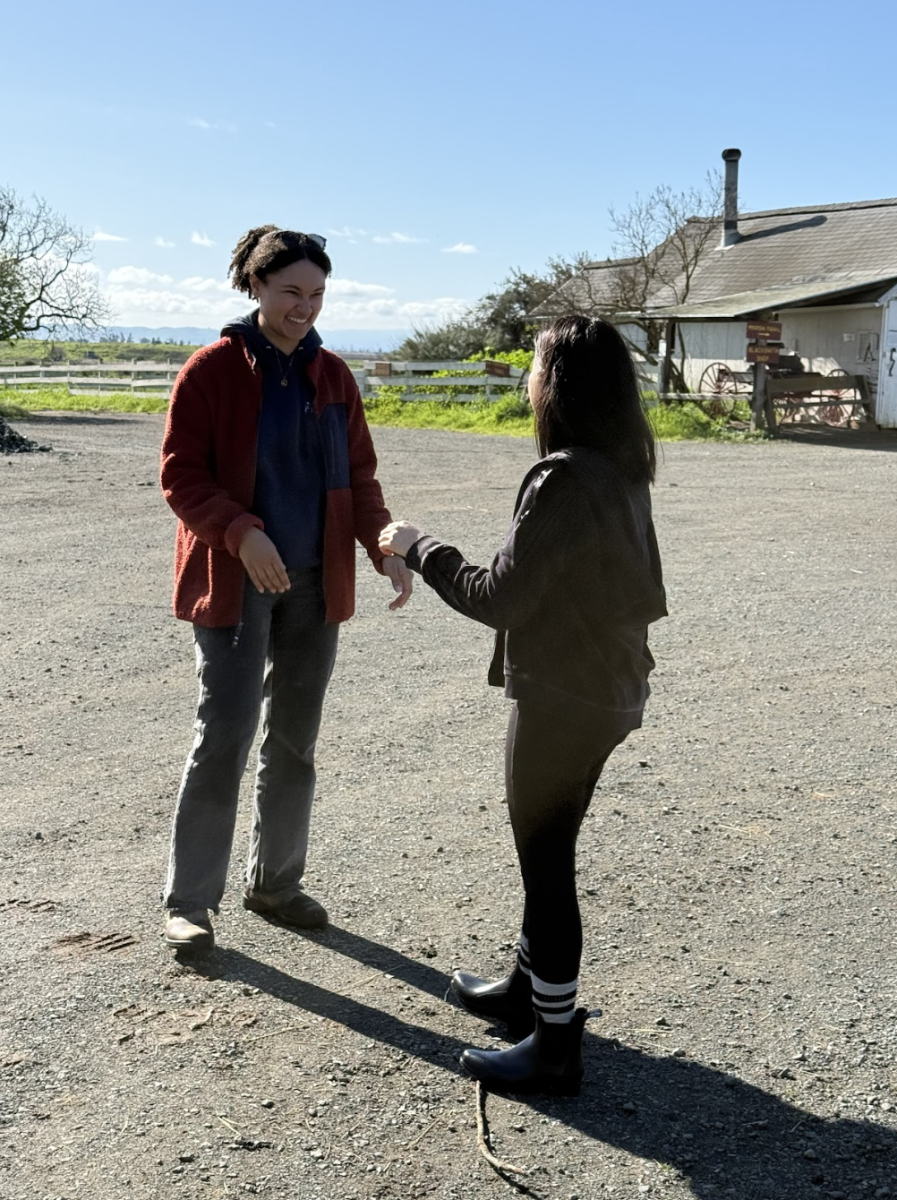
Kimberly met the students at the Rush Ranch Nature Center, greeted them with signed introductions, and began a morning of exploration that blended their research into salmon, and Evans’ own research in the marsh through the shared language of ASL. While this group of Deaf students receive academic instruction in ASL from their two teachers of the deaf, it is rare for them to have direct language access with other adults, like Kimberly, who have rich content and specialized scientific experiences to share. Kimberly’s ability to directly engage with students about the Suisun Marsh, what students were observing and wondering about, and her unique educational journey in the sciences were extremely impactful. One student in particular continues to talk about her time at the marsh and has expressed a desire to possibly pursue a career in the sciences, like Kimberly.
Together, the group wandered along the edges of the tidal wetlands, learning about the marsh’s role as a vital habitat for birds, plants, and other wildlife that depend on the delicate balance of fresh and saltwater. The main focus, and interest, was of course, salmon.
Students were not only encouraged to, but more importantly, able to ask questions. Big difference between past experiences and this one, a researcher was able to answer each one directly in ASL, making complex ideas about ecology, research and conservation come alive in a way that all students could access. Whether students were curious why certain species thrive in brackish marshes, or what researchers look for in field data, Kimberly’s responses were immediate, clear, and empowering.
This field trip wasn’t just about seeing nature up close. It showed students what it means to be a scientist who welcomes all ways of communicating and learning. By interacting directly with a researcher (this particular researcher they have been engaging with for years now), students see that language should never be a barrier to participating in scientific discovery. They come away with a deeper understanding of ecosystems and a sense of belonging in the scientific community.
 Experiences like this are also
deeply connected to the research that guides programs like
Spinning Salmon. While traditional assessments often measure
things like test scores or content knowledge, they rarely capture
moments like these: when a student asks a question in their
primary language, when a scientist shares their own pathway into
research, or when a young person begins to imagine themselves as
someone who could pursue science in the future. Our research
shows that when students’ languages are recognized and valued as
part of doing science, we often see meaningful growth in their
sense of belonging in scientific spaces. For us, understanding
the impact of programs like this means looking at the full
picture of how students experience science. How access,
communication, relationships, and meaningful participation shape
the way they see themselves in scientific spaces. These moments
of connection, curiosity, and belonging can be difficult to
quantify, but they are often some of the most powerful outcomes
of engaging students in authentic scientific experiences.
Experiences like this are also
deeply connected to the research that guides programs like
Spinning Salmon. While traditional assessments often measure
things like test scores or content knowledge, they rarely capture
moments like these: when a student asks a question in their
primary language, when a scientist shares their own pathway into
research, or when a young person begins to imagine themselves as
someone who could pursue science in the future. Our research
shows that when students’ languages are recognized and valued as
part of doing science, we often see meaningful growth in their
sense of belonging in scientific spaces. For us, understanding
the impact of programs like this means looking at the full
picture of how students experience science. How access,
communication, relationships, and meaningful participation shape
the way they see themselves in scientific spaces. These moments
of connection, curiosity, and belonging can be difficult to
quantify, but they are often some of the most powerful outcomes
of engaging students in authentic scientific experiences.
As we look ahead to more field experiences like this one, we’re reminded how important it is to create opportunities where every young person can explore, ask questions, and connect their learning to the world around them, importantly in the language that feels most natural to them.
Stay tuned for more stories from our explorations in science and the environment!