
Making Grades Work for Every Student
UC Davis Researchers Partner with San Benito High School District to Refine Student Support Model
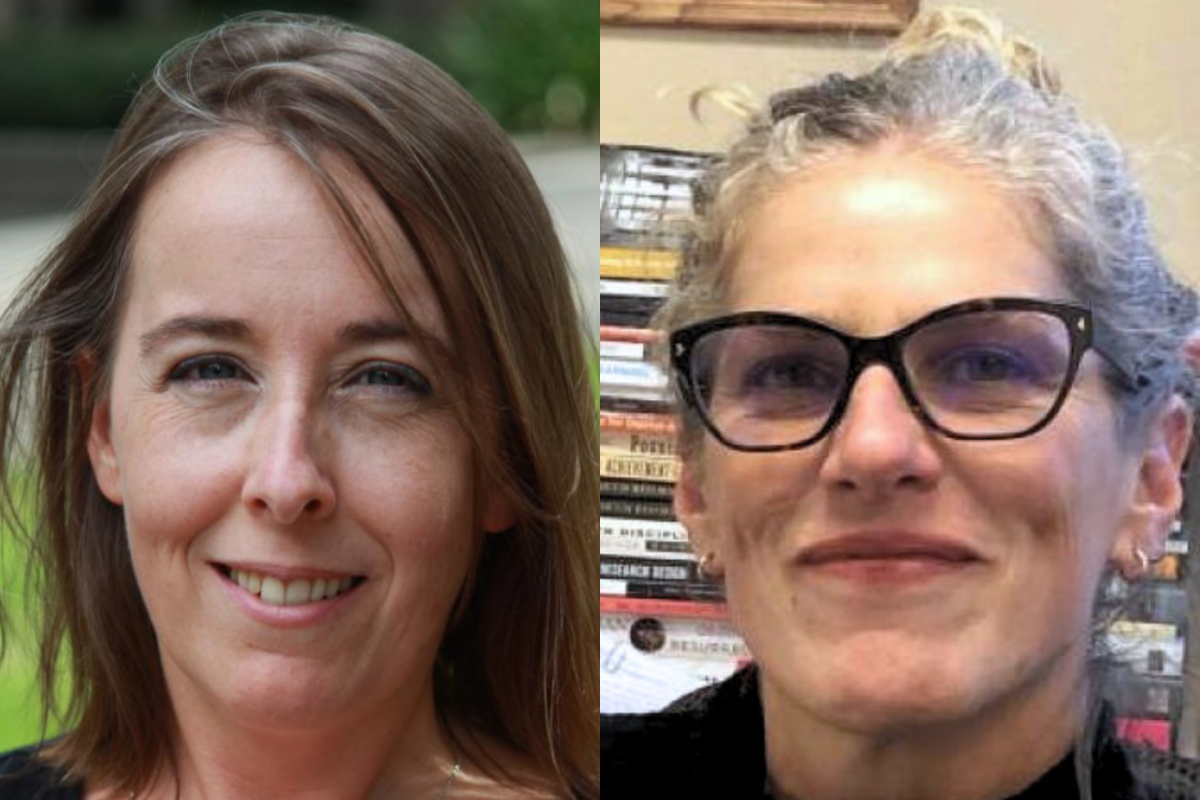
The San Benito High School District is collaborating with UC Davis scholars to establish a research-practice partnership (RPP) that embeds inquiry directly into the practice of equitably supporting students. Prof. Megan Welsh and Dr. Christina Murdoch are collaborating with Superintendent Dr. Shawn Tennenbaum, Assistant Superintendent Elaine Klauer, Director of Specialized Student Services and Special Education Dr. Paulette Cobb, Principal Kevin Medeiros, and Assistant Principal Derek Barnes to examine how their student support model functions in practice—and how it can be strengthened to reach the students who need it most.
 The San Benito High School
District has partnered with UC Davis researchers and
established a research practice partnership (RPP) to embed
inquiry directly into the work of equitably supporting all
students. Prof. Megan Welsh
and Dr. Christina
Murdoch are collaborating with Superintendent Dr. Shawn
Tennenbaum, Assistant Superintendent Elaine Klauer, Director -
Specialized Student Services and Special Education Dr. Paulette
Cobb, Principal Kevin Medeiros, and Assistant Principal Derek
Barnes to examine how their student support model functions in
practice—and how it can be strengthened to reach the students who
need it most.
The San Benito High School
District has partnered with UC Davis researchers and
established a research practice partnership (RPP) to embed
inquiry directly into the work of equitably supporting all
students. Prof. Megan Welsh
and Dr. Christina
Murdoch are collaborating with Superintendent Dr. Shawn
Tennenbaum, Assistant Superintendent Elaine Klauer, Director -
Specialized Student Services and Special Education Dr. Paulette
Cobb, Principal Kevin Medeiros, and Assistant Principal Derek
Barnes to examine how their student support model functions in
practice—and how it can be strengthened to reach the students who
need it most.
Through this RPP, Welsh and Murdoch are working alongside educators to analyze participation data, identify gaps in access, and refine the support system through an ongoing series of collaborative sessions. The collaboration aims to strengthen the district’s efforts to improve student outcomes and demonstrate how scholars can contribute practice-grounded research to improve student outcomes.
Ensuring Students Master Subjects

San Benito High School District in Hollister, California is redefining how they approach teaching and learning to ensure that students have ample opportunity to master course content over time, ensuring that equity and inclusivity remain a central focus in assessment practices.
To support learners’ mastery, the one-school district with roughly 3,500 enrolled students established Haybaler Support Time (HST). This system, named after the “haybaler” mascot, includes 30-minute periods four times a week during which students attend supplementary study sessions or life skill workshops. “Haybaler Support Time provides students with targeted support,” writes Superintendent Dr. Shawn Tennenbaum. “They have the ability to relearn a concept with which they may have struggled; find a quiet place to do their work; or participate in enrichment sessions such as how to get a driver’s license, make positive choices, or learn about women in leadership.”

For many students, the period creates a second chance to master material they might not have grasped the first time it was taught. But district leaders began to wonder: were the students who needed that second chance the most actually using it, and could support be scaled to address more learners’ needs? These questions encouraged the district leadership team to collaborate with UC Davis researchers Megan Welsh and Christina Murdoch in a process of using data to learn together.
From Discussion to Research-Practice Partnership
Tennenbaum had initially connected with Welsh and Murdoch through the Center for Applied Policy in Education’s California Superintendents Collaborative Network. This longstanding program, which convenes K–12 superintendents to discuss challenges and opportunities in their districts across multiple engagements, is led by Murdoch, the center’s executive director. As Tennenbaum continued to report on the HST system during these sessions, he, Welsh, and Murdoch began thinking through ways they could collaborate more closely on the program. Together, they determined that Welsh and Murdoch would join the district’s efforts to embed inquiry into daily programming and examine how the HST model was operating on a daily basis. “We wanted to support the SBHSD in their efforts, and bring in ways to work together that are data informed,” said Murdoch.
In this partnership, Welsh and Murdoch met with Tennenbaum and administrators over a six-month span, learning about the district’s goals and identifying how, together, the team could use research to build momentum for HST. Drawing from Welsh’s scholarship on educational assessment and measurement and Murdoch’s work on educational leadership, policy, and practice, the team sought to create a sustained, iterative process rather than complete a one-time evaluation or a prescriptive set of tools. “As researchers, we often lead with questions to help us focus on the key concerns of educators,” Welsh said. ‘Through this process of engaging with RPP partners, we get to learn as much from our partners as they learn from us. With SBHSD, we wanted to collaborate and work alongside them—not position ourselves as ”experts” who have all the answers.’ Still, the team’s approach is research-informed.
From district leadership meetings, the work moved from an in-depth analysis of 175 course syllabi, directly to working with teams of teachers and department chairs. Welsh and Murdoch facilitated sessions with them to review student data shared through a data sharing agreement and discuss ways to strengthen their individual Haybaler Support Time sessions. Welsh explains, “We engaged with teachers around our analyses of their data and discussed how they might collaborate to maximize the support provided to students. Our ultimate goal is to help teachers work together to better support students.”
Tackling Program Gaps with Data
As teacher conversations unfolded, a pattern started to emerge that echoed administrative data. Murdoch said, “The system seems to work really well for some students, but the team wants to see more students engage and benefit from HST. This is a major goal and focus of the district’s collaborative efforts.”
Welsh and Murdoch are now working with leadership to summarize and visualize participation data, looking for trends that might explain how students engage with the support system over time. “We’d like to know more about what inspires a student to start taking advantage of Haybaler Support Time, and what it looks like when a student moves from not engaging to engaging in the program,” said Welsh. “Are there indicators we can take from the dataset to help us adjust student supports?”
Building Long-Term Impact Through Partnership
While HST and Welsh and Murdoch’s research are rooted in SBHSD, implications for the field extend beyond a single district. In many school systems, sustained data analysis is often weighed against operational demands and compliance reporting. Through a RPP, Welsh and Murdoch have collaborated on district efforts to more deeply assess its practices without diverting attention from immediate needs. This also brings educators’ experiences into conversation with academic research, connecting theoretical discourse to the realities of classrooms and school leadership. “What’s the point of research if it doesn’t actually impact practice?” Welsh asks.
By embedding inquiry into implementation, the partnership offers a model for how universities can contribute iterative, practice-grounded knowledge while strengthening the student outcomes they study. “It’s about recognizing what important questions we can answer with data today and what requires ongoing learning within the system in order to improve student outcomes,” Murdoch said. “We—the researchers, administrators, and teachers—will continue improving our practice so the system effectively serves students.”