
Researchers Turn Burned Forests into Lessons in Climate Resilience
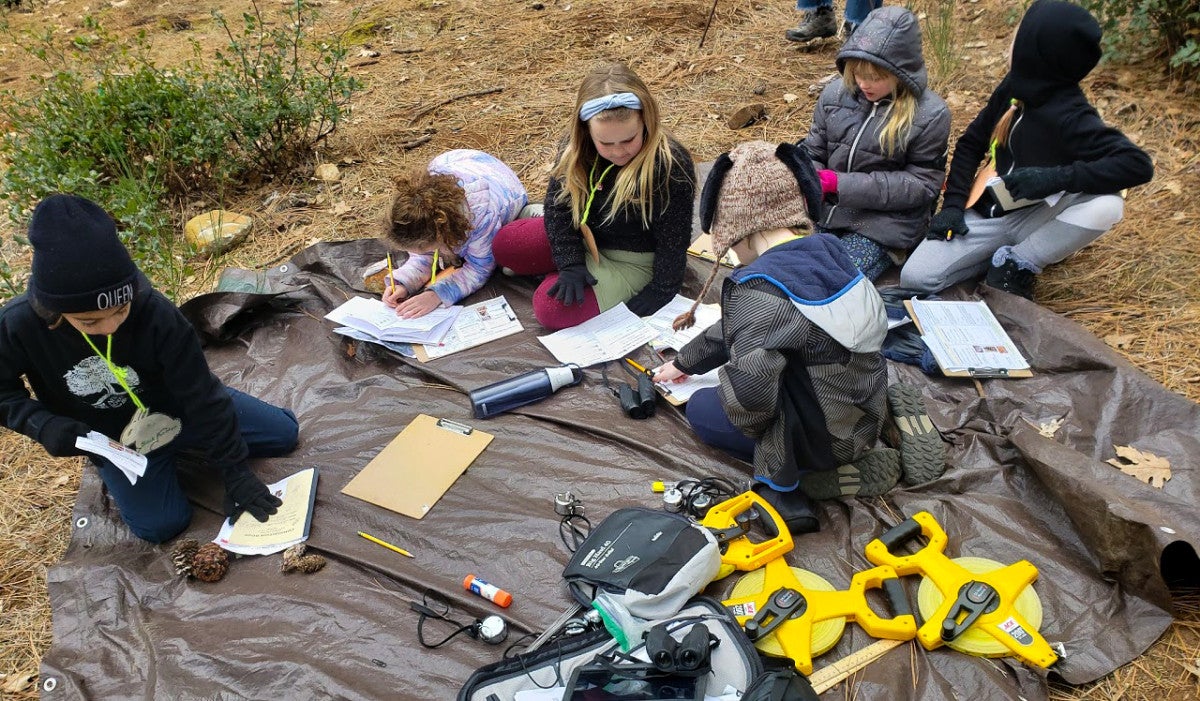
Northern California elementary students are gaining the knowledge and confidence to become the next generation of environmental stewards. Through Our Forests, a program developed and studied by the UC Davis Center for Community and Citizen Science and Sierra Streams Institute and funded by the National Science Foundation, students joined forest managers in the Sierra Nevada foothills to measure tree growth, identify native plants, and observe how forests recover after wildfire. By learning how science works in real time, they’re developing a deeper understanding of ecosystems and the role people play in sustaining them—insights that are essential for informed participation in environmental advocacy.
“When students slow down to really notice what’s in front of them, they begin to see how new growth connects to old burns, how diversity builds resilience,” said research lead Prof. Heidi Ballard. “You can see the shift happen in real time: they move from simply following instructions to asking their own questions. They start to understand that the forest isn’t just a site for research, it’s a living system they’re part of.”
Science in the Field: Real Data, Real Learning
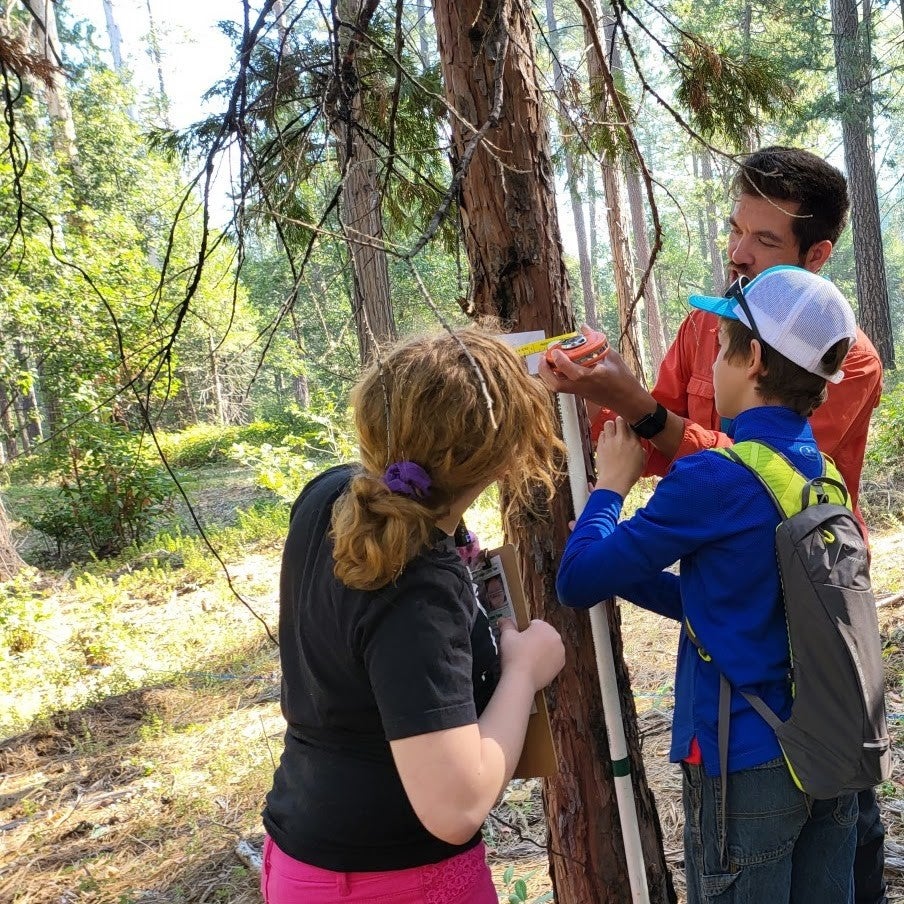 Our Forests, a
collaboration between the UC Davis School of Education’s Center
for Community and Citizen Science, the nonprofit organization
Sierra Streams Institute, and the Nevada County Superintendent of Schools,
is reshaping science education through locally rooted, real-world
problem solving. Throughout the five-module curriculum, developed
by Sierra Streams Institute, 3rd–5th grade
program participants worked with scientists and land managers to
measure saplings, identify plant species, and count trees in
marked plots. Their observations shed light on forest health and
ecosystem resilience in their own communities, contributing data
to ongoing restoration and management efforts.
Our Forests, a
collaboration between the UC Davis School of Education’s Center
for Community and Citizen Science, the nonprofit organization
Sierra Streams Institute, and the Nevada County Superintendent of Schools,
is reshaping science education through locally rooted, real-world
problem solving. Throughout the five-module curriculum, developed
by Sierra Streams Institute, 3rd–5th grade
program participants worked with scientists and land managers to
measure saplings, identify plant species, and count trees in
marked plots. Their observations shed light on forest health and
ecosystem resilience in their own communities, contributing data
to ongoing restoration and management efforts.
The Our Forests research team found that bringing these students into hands-on data collection strengthened their understanding of how soil, sunlight, water, and living organisms interact as a system to support tree health. They also observed that many of the participants began to see people as part of these systems, recognizing that decisions such as prescribed burns or tree thinning will impact environmental outcomes. “A healthy forest has to be an open space for other plants to grow, so they can get as much sunlight and water as they need,” explained one student. “There was a fire where my dad lives, and everybody had to evacuate,” said another. “I think that was a bad wildfire because there was too much forest density.”
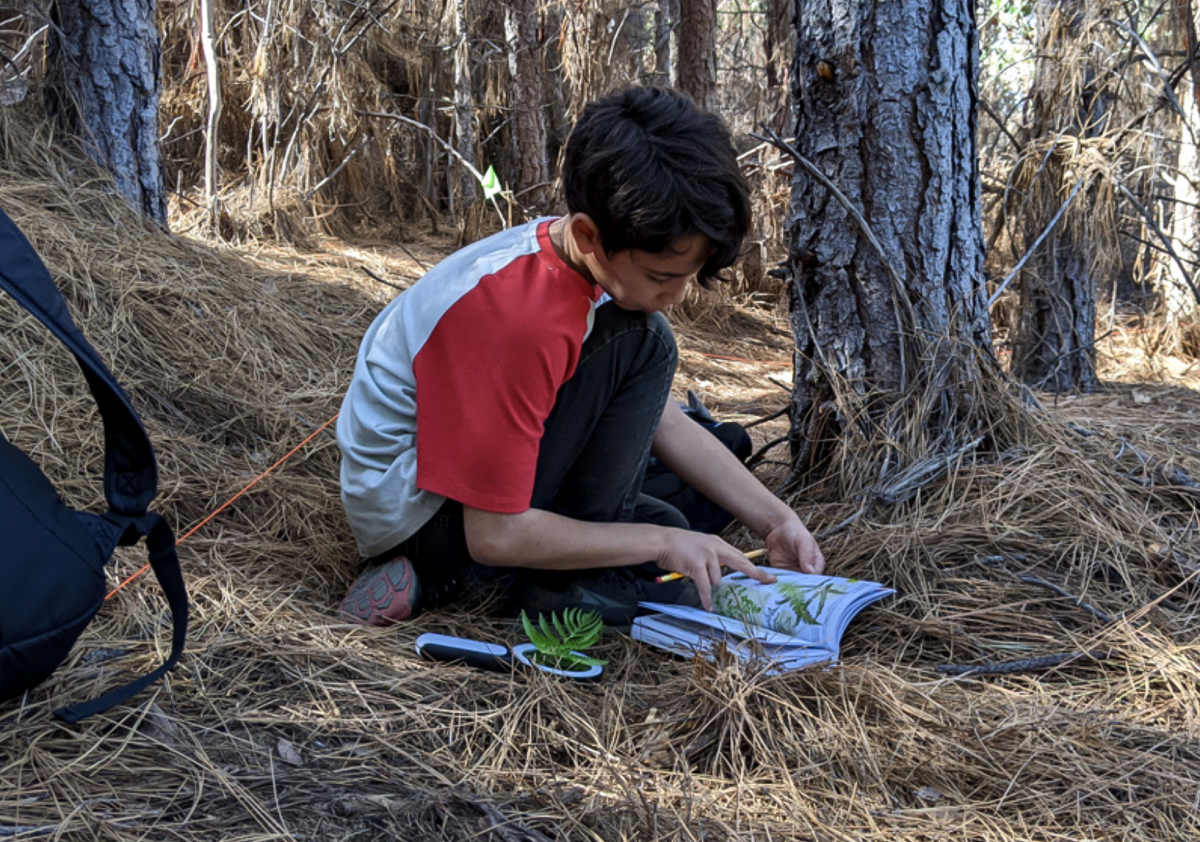
Among the scientific practices students used, close observation and species identification had the greatest impact. As they learned to notice and name what they saw, students began to connect small details to broader ecological patterns. They also suggested management actions that their communities could take to address wildfire risks. Several students recommended controlled burns for their forest sites. “It’s efficient and plants need fire. It takes care of the leaf litter,” said a student.
From Data Collection to Stewardship
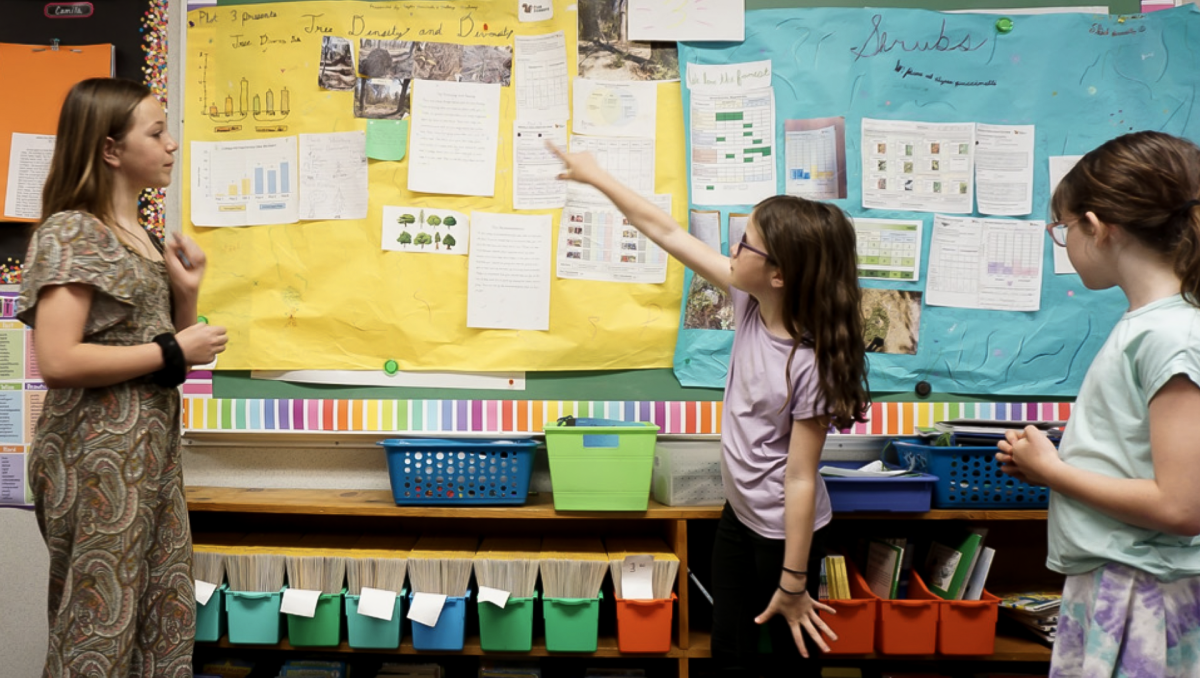 For students in fire-affected
communities, these observations often hit close to home. The act
of noticing became a way not just to learn, but to care. The
Our Forests study revealed that early experiences in
community science can build both understanding and
agency. When students saw their work contribute to real
decisions, science became a tool for caring for the places they
know and love. “We saw students putting the pieces of the puzzle
together, where they understood their own role in the science
that helped people make decisions about the forest,” said
Ballard. “They weren’t just learning about science, they were
doing it.”
For students in fire-affected
communities, these observations often hit close to home. The act
of noticing became a way not just to learn, but to care. The
Our Forests study revealed that early experiences in
community science can build both understanding and
agency. When students saw their work contribute to real
decisions, science became a tool for caring for the places they
know and love. “We saw students putting the pieces of the puzzle
together, where they understood their own role in the science
that helped people make decisions about the forest,” said
Ballard. “They weren’t just learning about science, they were
doing it.”
The Our Forests research team recommends expanding this model through repeated, progressively deeper experiences across grade levels, so that what begins as simple observation grows into exploring connections between social and ecological systems. This approach helps students move from curiosity and critical thinking to advocacy and action.
 As climate change drives more
frequent and severe wildfires across California, understanding
how ecosystems recover, and how communities can support them, is
essential. Our Forests shows that even young students
can engage meaningfully in community science when given the
chance to observe, question, and contribute. “If we want
resilient landscapes, we need learners who understand the systems
they live in and feel empowered to care for them,” Ballard
concluded.
As climate change drives more
frequent and severe wildfires across California, understanding
how ecosystems recover, and how communities can support them, is
essential. Our Forests shows that even young students
can engage meaningfully in community science when given the
chance to observe, question, and contribute. “If we want
resilient landscapes, we need learners who understand the systems
they live in and feel empowered to care for them,” Ballard
concluded.