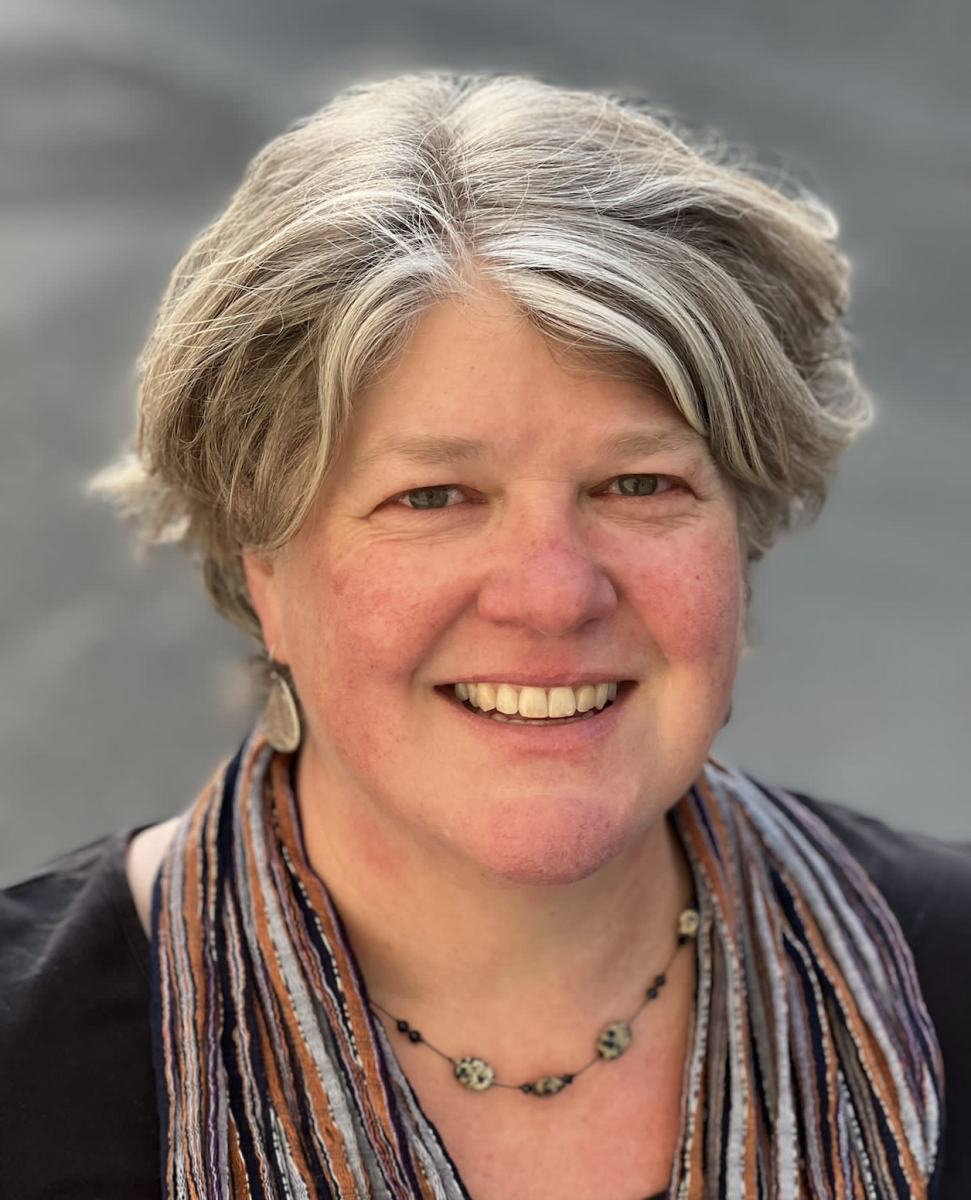
Heidi Ballard is the Founder and Faculty Director of the Center
for Community and Citizen Science. You can find more information
about her past and current projects, and sign up for occasional
updates at the
Center’s website.
I am interested in environmental education that links
communities, science, environmental action and learners of all
ages. Particularly I’m interested in what and how people learn
through public participation in scientific research (PPSR) as a
form of informal science education. From citizen
science-type projects for conservation to participatory action
research for natural resources management and environmental
justice, PPSR projects can create unique opportunities for
learning by participants and scientists. Understanding the
outcomes and processes of these projects can contribute to better
practices in environmental and science education, and better
conservation and natural resource management.
Research Interests
Environmental Education; Citizen science; Participatory Action
Research; In-service and preservice teacher learning; Science
Education; Secondary Education; Service-learning. For more
information.
Education
- Ph.D. (2004) Environmental Science, Policy and Management
from University of California, Berkeley
- M.A. (1999) Teaching Biological Sciences from Miami
University, Ohio
- California Single Subject Teaching Credential (1994) Science
and English Literature, Stanford Teacher Education Program,
Stanford University
- M.A. (1993) Education, Science Curriculum and Teacher
Education, Stanford University
- B.A. (1993) Human Biology and English Literature, Stanford
University
Academic Positions
University of California – Davis, Professor of Environmental
Science Education, School of Education, Davis, CA.
2006-present.
Center for Community and Citizen Science, Faculty Director,
School of Education, University of California – Davis, CA.
2016-present.
Oberlin College, Visiting Assistant Professor, Environmental
Studies Program, Oberlin College, Oberlin, OH. 2005-6.
Colorado State University, Post-Doctoral Researcher, Dept. of
Forest, Watershed and Rangeland Stewardship, Fort Collins, CO.
2004-6.
Publications
Ardoin, N. M., Reid, A., Bowers, A. W., Ballard,
H.L., & Monroe, M. C. 2026. Engaging people in
educational processes that foster environmentally valuable
outcomes: A synthesis of key findings across eight systematic
reviews. People and Nature.
Gerhart, L., Ballard, H., Correia, C., Johnson,
J., Meyer, R., & Winn, A. 2025. The Value of Garden-Based
Participatory Environmental Science Projects in California
Prisons. In Handbook on Lived Experience in the Justice
System (pp. 380-392). Routledge.
Harwell, T. A., Meyer, R. M., & Ballard, H. L.
2025. How establishing a marine protected area network has shaped
community and citizen science along California’s
coast. Frontiers in Marine
Science, 12, 1548864.
Race, A. I., Yan, S., Spurgin, C., Henson, S., Portier, E. F., &
Ballard, H. L. 2025. Elementary students
learning through data analysis and sharing findings: design-based
research for community and citizen science in
schools. International Journal of Science Education,
Part B, 1-21.
Jadallah, C. and H.L. Ballard. 2024. Learning and distributed
expertise in community-based science. Science
Education 1-18.
Miller, J.M, H.L. Ballard, A.I. Race, S. Yan, S.
Henson, E.F. Portier, E.R. Schectman. Incorporating Community and
Citizen Science into Elementary Schools: Key Program Design
Features from Research and Practice. 2025. In Tsybulsky, D. and
T. Tal (Eds.), Citizen Science Contributions to Biology and
Environmental Education: Realities, Impact and
Opportunities. Switzerland: Springer Nature.
Ballard, H.L., A.J. Lindell, C. Jadallah.
2024. Environmental
education outcomes of Community and citizen science: A systematic
review of empirical literature. Environmental Education
Research, 1-34.
Herodotou, C. N. Ismail, A.I. Benavides Lahnstein, M. Aristeidou,
A.N. Young, R.F. Johnson, L.M. Higgins, M. Ghadiri Khanaposhtani,
L.D. Robinson, and H.L. Ballard. 2024. Young people in
iNaturalist: a blended learning framework for biodiversity
monitoring. International Journal of Science Education,
Part B, 14(2), 129-156.
Lorke, J., H.L. Ballard, L. Robinson. 2024.
More
complex than expected -Mapping activities and youths’ experiences
at BioBlitz events to the Rosette model of Science
Communication. Frontiers in Environmental Science
11:1270579.
Yan, S., A. Race, H.L. Ballard, E. Bird, S.
Henson, E.F. Portier, A. Lindell, M. Ghadiri Khanaposhtani, J.M.
Miller, E.R. Schectman. 2023. How Can Participating in a
Forest Community and Citizen Science Program Support Elementary
School Students’ Understanding of Socio-Ecological Systems?
Sustainability, 15, 16832.
Jadallah, C., H.L. Ballard, A.
Patterson-Williams, C. Carter-Ching, R. Meyer. 2023. “Seeing power”
between young people and conservation professionals in the design
of a community-based watershed monitoring initiative.
Journal of the Learning Sciences, 33,(1), 1-40.
Eitzel, M.V., Meyer, R., Morley, S., Miller, I., Shafroth, P.B.,
Behymer, C., Jadallah, C., Parks, D., Kagley, A., Shaffer, A. and
Ballard, H., 2023. Lessons learned from
community and citizen science monitoring on the Elwha River
restoration project. Frontiers in Ecology and
Evolution, 11, p.1216080.
Ballard, H.L. 2023. Community and citizen
science in schools: nested inquiries, productive tensions, and
the role of communities. Instructional Science: 1-7.
Ballard, H. L., Calabrese Barton, A., &
Upadhyay, B. 2023. Community‐driven science and science
education: Living in and navigating the edges of equity, justice,
and science learning. Journal of Research in Science
Teaching 60 (8): 1613-1626.
Dixon, C.G., E.M. Harris, and H.L. Ballard.
2023. Identities in Action: Opportunities and Risks of Identity
Work in Community & Citizen Science, in H.T. Holmegaard and L.
Archer (Eds.) Science Identities – Theory, method and
research. Switzerland: Springer Nature.
Phillips, T.B. and H.L. Ballard. 2023. Informal
Learning through Citizen Science: Authentic, Meaningful,
Impactful, In J. Diamond and S. Rosenfeld (eds) Amplifying
Informal Science Learning. New York, NY: Routledge.
Bird, E.B., H.L. Ballard, and M. Hart. 2023.
Data to decision-making? How elementary students use their
Community and Citizen Science project to reimagine their school
campus. Instructional Science 51(5),
763-791.
Ghadiri Khanaposhtani, M., H.L. Ballard, J.
Lorke, A.E. Miller , S. Pratt-Taweh, J. Jennewein, L. D.
Robinson, L. Higgins, R. F. Johnson, A. N. Young, G. B. Pauly and
A. I. Benavides Lahnstein. 2022. Examining youth participation in
ongoing community and citizen science programs in 3 different
out-of-school settings. Environmental Education Research.
1-25
Wardlaw, J., A.I. Benevides-Lahnstein, L. Robinson, J. Lorke, S.
Pratt, M. Ghadiri Khanaposhtani, H.L. Ballard,
V. Burton. 2022. Impacts of re-framing a marine citizen science
programme and shifting to virtual delivery on young people’s
environmental science learning: A case study of the Big Seaweed
Search. Connected Science Learning.
Herodotou, C., N. Ismail, M. Aristeidou, G. Miller, A.I.
Benavides Lahnstein, M. Ghadiri Khanaposhtani, L. Robinson,
H. L. Ballard. 2022. Online Community and
Citizen Science supports environmental science learning by young
people. Computers & Education.
Drill, S., Rosenblatt, C., Cooper, C., Cavalier, D., &
H.L. Ballard. (2022). The
Effect of the COVID-19 Pandemic and Associated Restrictions on
Participation in Community and Citizen Science. Citizen
Science: Theory and Practice, 7(1).
Jadallah, C.C. and H.L. Ballard. 2021.
Social learning in participatory approaches to conservation and
natural resource management: Taking a sociocultural perspective.
Ecology and Society.
Hardie Hale, E., C.C. Jadallah and H.L.
Ballard. 2021.
Collaborative research as boundary work: learning between rice
growers and conservation professionals to support habitat
conservation on private lands. Agriculture and Human
Values.
Aristeidou, M., Herodotou, C., Ballard, H.
L., Higgins, L., Johnson, R. F., Miller, A. E., …
& Robinson, L. D. 2021. How Do Young Community and Citizen
Science Volunteers Support Scientific Research on Biodiversity?
The Case of
iNaturalist. Diversity, 13(7), 318.
Ballard, H.L., A. Calabrese Barton, and B.
Upadhyay. 2021. Editorial, Call for Papers Special Issue,
Community-Driven Science: Evidence of and implications for
equity, justice, science learning, and participation. Journal
of Research in Science Teaching, 58(5): 621-624.
Lorke, J., H.L. Ballard, A.E. Miller, S.
Pratt-Taweh, J. Jennewein, A. Young, L. Higgins, R. Johnson, L.
Robinson. 2021. Step
by step towards citizen science – Deconstructing youth
participation in BioBlitzes. Journal of Science
Communication, 20(4).
Harris, E.M. and H.L. Ballard. 2021.
Examining student
environmental science agency across school science
contexts. Journal of Research in Science
Teaching, 58(6): 906-934.
Stephens, A. and H.L. Ballard. In Press. Chapter
5. Developing environmental action competence in an urban high
school agriculture and environmental program. In Esters, L.T.,
Patchen, A., DeCoito, I., Knobloch, N. (Eds.), Research
Approaches in Urban Agriculture and Community Contexts.
Ballard, H.L., A. Calabrese-Barton, and B.
Upadhyay. In press. Editorial, Call for Papers Special Issue,
Community-Driven Science: Evidence of and implications for
equity, justice, science learning, and participation. Journal
of Research in Science Teaching, 1-4.
Lorke, J., H.L. Ballard, A.E. Miller, S.
Pratt-Taweh, J. Jennewein, A. Young, L. Higgins, R. Johnson, L.
Robinson. In press. Step by step towards citizen science –
Deconstructing youth participation in
BioBlitzes. Journal of Science Communication.
Harris, E.M. and H.L. Ballard. In press.
Examining student environmental science agency across school
science contexts. Journal of Research in Science
Teaching.
Aristeidou, M., C. Herodotou, H. L.
Ballard, A.N. Young, A.E. Miller, L. Higgins, R. F.
Johnson. 2021. Exploring the participation of young citizen
scientists in scientific research: The case of
iNaturalist. PLos ONE, 16 (1), e0245682.
Bruckermann, T. Lorke, J., Rafolt, S., Scheuch, M., Aristeidou,
M., Ballard, H., Bardy-Durchhalter, M., Carli,
E., Herondotou, C., Kelemen-Finan, J., Robinson, L., Swanson, R.,
Winter, S., & Kapelari, S. (2020). Learning opportunities and
outcomes in citizen science: A heuristic model for design and
evaluation. In O. Levrini & G. Tasquier (Eds.)
Electronic Proceedings of the European Science Education
Research Association (ESERA) 2019 Conference, (pp.
889-898). University of Bologna.
Bird, E.B., P. Harte and H.L. Ballard. 2020.
Birds near and far: Students investigate local environmental
phenomena on campus and at a local pond. Science and
Children, Sept./Oct. 2020, p. 48-54.
Ballard, H.L. and E.M. Harris. 2020. Training.
In C. Lepczyk, T. Vargo and O. Wilson (Eds), Handbook of
Citizen Science in Ecology and Conservation. Berkeley, CA,
USA: University of California Press.
Herodotou, C., M. Aristeidou, G. Miller,
H.Ballard and L. Robinson. 2020. What do we know about young
volunteers?: An exploratory study of participation in
Zooniverse. Citizen Science: Theory and Practice, 5
(1): 2, pp. 1-14.
Harris, E.M., C.G.H. Dixon, E.B. Bird and H.L.
Ballard. 2019. For science and
self: Youth interactions with data in community and citizen
science. Journal of the Learning Sciences.
Phillips, T.B., H.L. Ballard, B.V. Lewenstein
and R. Bonney. 2019. Engagement in science through
citizen science: Moving beyond data collection. Science
Education, 103:665–690.
Harris, E.M. and H.L. Ballard. 2018. Science in
the palm of your hand: A framework for designing and facilitating
citizen science in the classroom. Science and
Children, April 2018.
Ballard, H.L., T.B. Phillips and L. Robinson.
2018. Conservation outcomes for citizen science. In A. Bonn, M.
Haklay, S. Hecker, A. Bowser, Z. Makuch & J. Vogel (Eds),
Citizen Science: Innovations for Science and Society.
London, UK: University College London Press.
Funded Research
Lead PI, NSF-funded grant in Discovery Research in K-12 Learning
program, “Collaborative Research: Designing for science learning
in schools by leveraging participation and the power of place
through community and citizen science”, (DRL#1908915,
8/1/2019-7/31/2023, 1,134,331 at UCD; 2,515,862 total).
Lead PI, international NSF/Wellcome Trust funded grant in
Advancing Informal STEM Learning (AISL) program, “Science
Learning +: Youth learning in Public Partcipationin Scientific
Research opportunities (crowdsourcing and citizen science)
facilitated by natural history museums”, (DRL-1647276,
4/1/2017-3/31/2022, $1,371,404 in US, $2,222,750 total US and
UK).
PI, sub-award from Public Laboratory for Open Technology and
Science (Public Lab) from Gordon and Betty Moore Foundation.
“Community science for science learning for civic engagement”,
(2016-2018, $160,000, $375,000 Total).
Co-PI, “Developing a Comprehensive Community Engagement
Evaluation Framework”, Public Laboratory for Open Technology and
Science (Lead PI Public Lab) from Rita Allen Foundation
(2015-2018, $79,200).
PI, “Exploring Engagement and Science Identity through
Participation: A Meta-Analysis of Citizen Science Projects”,
National Science Foundation, Advancing Informal STEM Learning
Program (2013-2018, $995,000 total collaborative research project
with Rick Bonney (Lead PI) Cornell Univ.).
Scaling up cost-efficient community engagement in coastal
resource management (Co-PI), Tri-State Sea Grant (Dr. Julia
Parrish Lead PI, University of Washington) (2014-2017, $250,000).
PI, Youth Community and Citizen Science – Public Participation in
Scientific Research as a Tool to Promote Science Learning,
Environmental Stewardship and Civic Engagement for Youth: A
Proposal for Research on Practices, Tools and Outcomes, Stephen
D. Bechtel Foundation (2014-2017, $800,000).
Co-PI, “Increasing the Capacity of Smallholder Farmers to Produce
and Market Vegetable Crops in Uganda and Democratic Republic of
Congo. Horticulture Collaborative Research Support Program.
(2011-2014, $437,000)
Lead PI, “Citizen Science in the California Naturalist Program:
Building the Nexus Between Learning and Action”, National Science
Foundation, Informal Science Education Program (2011-2013,
$249,972).
Environmental learning, mitigation strategies, and lion
conservation in Tanzania (PI), Collaborative Interdisciplinary
Research Grant, University of California, Davis. (2010-2012,
$24,500)
Honors and Awards
- University of California, Davis Chancellor’s Fellow,
2015-2020. ($25,000).
- University of California, Davis Hellman Fellow, 2010.
$20,440. Social learning in contested fields: Collaborative
research and action among rice growers and migratory bird
conservationists.
Courses Taught at UC Davis
- Introduction to Environmental Education (upper division
undergraduate, annually)
- Science Communication and Education (upper division
undergraduate)
- Inquiry into Classroom Teaching (multi-course sequence)
(MA/Credential, secondary science and elementary)
- Participatory Action Research Methods (graduate methods,
annually)
- Science Literacy and Science Education Reform (graduate
seminar)
- Science, Agriculture and Mathematics Education Research
Seminar (graduate seminar)
- Environmental Education Research Seminar (graduate seminar)
- Ecology Seminar on Citizen Science (graduate seminar)
Graduate Student Researchers
Chris Jadallah
Amanda Lindell
Connor Rosenblatt
Emily Harris
Colin Dixon
Karen Bush
Jennifer Metes
Sinead Brien
Professional Experience
K-12 Teaching Experience
- 1995-1998 Henry M. Gunn High School, Palo Also, California.
9-12th Grade Biology, Global Science, Physics, Applied
Biology
- 1993-1995 John F. Kennedy Middle School, Redwood City,
California. 7th Grade Life Sciences
Curriculum and Teacher Professional Development
- 1992-1993 Curriculum Developer, Stanford Project for
International and Cross-Cultural Education
- 1993-1996 Curriculum Developer, Human Biology Middle Grades
Life Sciences Curriculum Project, designed and wrote activities,
and conducted teacher professional development for Evolution,
Ecology, Human Sexuality and Reproduction curriculum units.
- 2000-2001 Science Consultant, Prentice Hall – Pearson
Education, Conducted science textbook presentations and inservice
workshops for middle and high school teachers throughout
California.
Recent Scholarly Services
- Editorial Board, Citizen Science: Theory and
Practice
- Editorial Board, BioScience
- Reviewer, Science Education
- Reviewer, Journal of Science Communication
- Reviewer, Environmental Education Research
- Reviewer, Biological Conservation
- Review Panels for National Science Foundation
- Advisory Board member of over 10 European Union-funded and
National Science Foundation-funded projects
- Co-Editor in Chief, 2016 Inaugeral Issue, Citizen
Science: Theory and Practice, Journal of the
international Citizen Science Association.
- Governance Council, 2010-2015, Center for Collaborative
Research for an Equitable California, University of
California-wide Multi-Campus Research Unit
Professional Associations
- National Association for Research in Science Teaching
- American Educational Research Association
- Citizen Science Association
- North American Association for Environmental Education
- Society for Conservation Biology
- Ecological Society of America


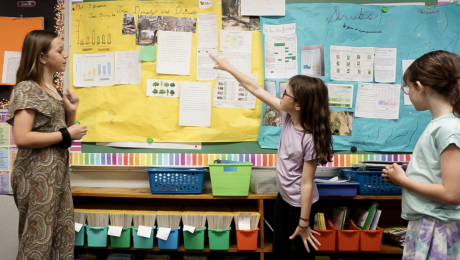
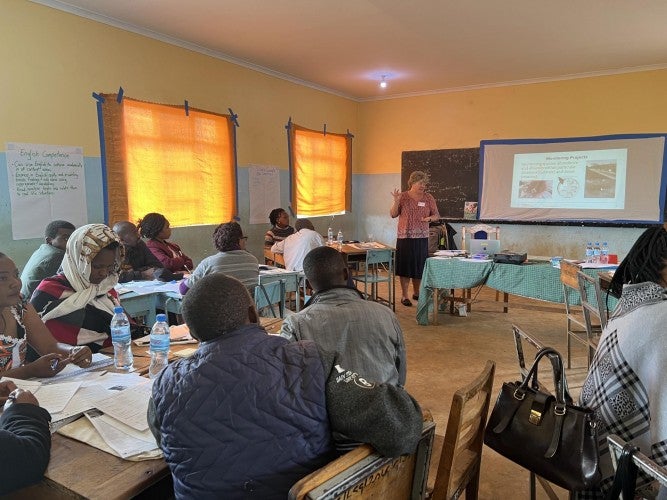

 On June 18, 2025, director Heidi
Ballard gave a wonderful presentation on community science for
environmental education (EE) in the eeWORKS webinar “eeWORKS:
What We Have Learned and Why It Matters“. With over 200
people registered, Heidi dove into systematic review findings
about EE and its impact on K-12 education, youth development, and
much more.
On June 18, 2025, director Heidi
Ballard gave a wonderful presentation on community science for
environmental education (EE) in the eeWORKS webinar “eeWORKS:
What We Have Learned and Why It Matters“. With over 200
people registered, Heidi dove into systematic review findings
about EE and its impact on K-12 education, youth development, and
much more.
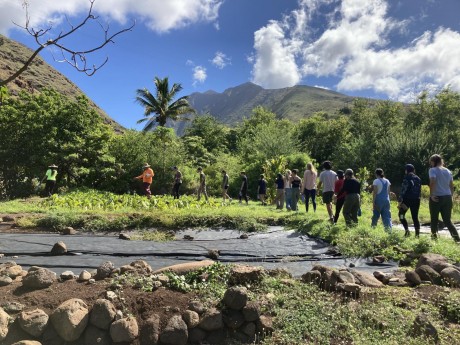
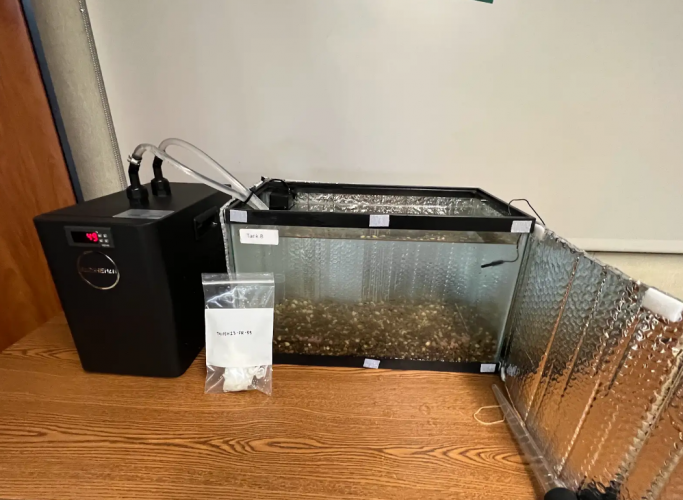 We are excited to share a
significant milestone for the Spinning Salmon Project: the launch
of Year 4 of student-driven data collection in partnership with
the GEAR UP STEM Rural Valley Partnership! This collaboration is
energizing students with 21st-century tools, empowering them to
explore salmon ecology while supporting GEAR UP’s core goals:
We are excited to share a
significant milestone for the Spinning Salmon Project: the launch
of Year 4 of student-driven data collection in partnership with
the GEAR UP STEM Rural Valley Partnership! This collaboration is
energizing students with 21st-century tools, empowering them to
explore salmon ecology while supporting GEAR UP’s core goals: