
Statewide Study Taps 3,000 Students to Research Thiamine Deficiency that Sets Salmon Spinning
High schoolers' efforts provide model for community-based conservation

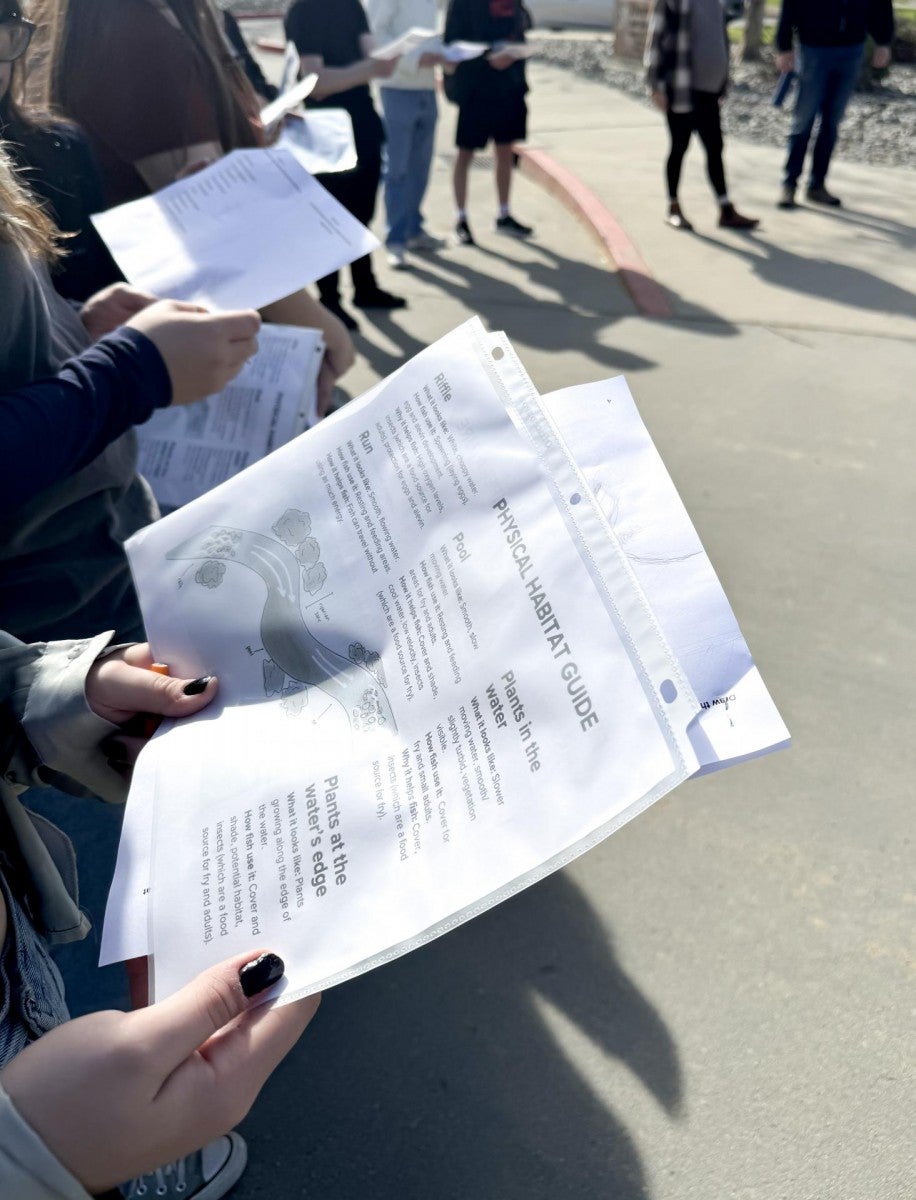
The Feather River Fish Hatchery is a popular field trip destination for Northern California schools, offering an insider’s look at salmon spawning. But when a dozen students from Red Bluff High School visited the hatchery, they weren’t just learning about fish life cycles—they were reflecting on their own scientific work to support the local salmon population.
The group followed the hatchery tour guide, listening to him describe the facility and how it operates. “We’ve seen an increase in salmon mortality rates in the last few years,” he said. “There’s actually a team of people at UC Davis conducting a research study to better understand what’s going on.” From the back of the group, Peggy Harte raised her arm and pointed to the students standing around her. “You’re talking about these students!” she exclaimed. “They’re the ones collecting data on the salmon.”
 Harte, Youth Education Program Manager
for the Center for Community
and Citizen Science (CCCS), is a co-lead on the Spinning Salmon Program. A
university-community partnership with the UC Davis Center for Watershed
Sciences (CWS), California Department of Fish and
Wildlife (CDFW), National
Oceanic and Atmospheric Administration (NOAA),
Solano County Office of Education, and the GEAR UP STEM Rural Valley Partnership, the program
collects data on salmon mortality rates in the Central
Valley.
Harte, Youth Education Program Manager
for the Center for Community
and Citizen Science (CCCS), is a co-lead on the Spinning Salmon Program. A
university-community partnership with the UC Davis Center for Watershed
Sciences (CWS), California Department of Fish and
Wildlife (CDFW), National
Oceanic and Atmospheric Administration (NOAA),
Solano County Office of Education, and the GEAR UP STEM Rural Valley Partnership, the program
collects data on salmon mortality rates in the Central
Valley.
The students visiting the hatchery that day were not just observers—they were key contributors to real-world science. As research assistants for the Spinning Salmon Program, they were just a few of over 3,000 high schoolers across Solano, Sacramento, Tehama, Colusa, and Glenn counties who monitored salmon egg development right from their classrooms. Their observations and data collection played a critical role in a major five-year study on Thiamine Deficiency Complex (TDC) in salmon populations. By tracking behavioral changes and mortality rates in early life stages, these students helped advance efforts to understand and protect local salmon—bringing fresh insight and youthful curiosity to an urgent conservation challenge.
As an equity-driven model of scientific inquiry and problem solving, the Spinning Salmon Program also holds deeper implications for the STEM field and K-12 STEM education. It serves as a successful case study for implementing community and citizen science projects at scale. “This work couldn’t have been done without our students,” said Harte. “Spinning Salmon is a prime example of research and educational practices at their best. When youth come together with community members, researchers, educators, and policymakers, meaningful change happens.”
Reimagining K-12 STEM Education Through the Spinning Salmon Program
TDC was first observed in California’s salmon in 2020, when experts at the California Department of Fish and Wildlife Fish Health Laboratory and the UC Davis Aquatic Animal Health Laboratory noted that young salmon in fish hatcheries were swimming in spinning patterns and dying at unusually high rates. They suspected that the juvenile salmon had low levels of thiamine and launched a research study in collaboration with NOAA, CDFW, and CWS.
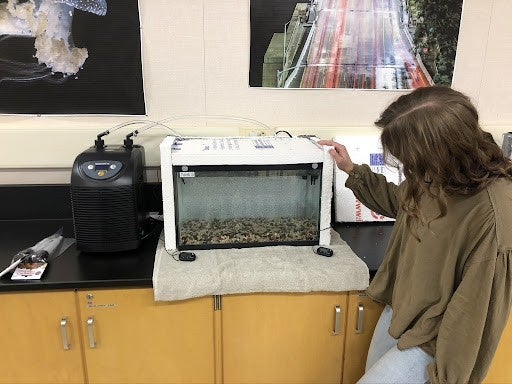 Monitoring hundreds of developing
salmon for signs of TDC and building a comprehensive dataset
would require a large team of research assistants. Conveniently,
a Yolo County elementary school teacher had reached out to CWS
Field and
Lab Director Carson Jeffres about a problem she and her
students had been observing in their classroom fish tank. The
class had been participating in CDFW’s Classroom Aquarium Education
Program, and noticed that the salmon in their fish tank were
swimming in circles. Jeffres realized that the fish used in the
Classroom Aquarium Education Program were demonstrating the signs
of TDC, and that CDFW’s program could be replicated for the
thiamine deficiency research study. With 25-30 student
participants per class, the TDC team could rapidly grow their
dataset.
Monitoring hundreds of developing
salmon for signs of TDC and building a comprehensive dataset
would require a large team of research assistants. Conveniently,
a Yolo County elementary school teacher had reached out to CWS
Field and
Lab Director Carson Jeffres about a problem she and her
students had been observing in their classroom fish tank. The
class had been participating in CDFW’s Classroom Aquarium Education
Program, and noticed that the salmon in their fish tank were
swimming in circles. Jeffres realized that the fish used in the
Classroom Aquarium Education Program were demonstrating the signs
of TDC, and that CDFW’s program could be replicated for the
thiamine deficiency research study. With 25-30 student
participants per class, the TDC team could rapidly grow their
dataset.
Jeffres approached Harte and CCCS in 2020 to co-create an observational protocol and lesson plans that would guide students through the monitoring process. Each class would receive a fish tank with 30-35 fall-run Chinook salmon eggs from the Feather River Fish Hatchery, which they would observe until the fish reached adolescence. They would then release all of the fish into the local watershed while they were still in early life stages.
“Involving K-12 students in field research is a powerful way to promote learning across many disciplines,” Harte said. “This format allows students to engage with real-world problems and serve as contributors to the solution. It makes science accessible and inclusive for everyone, especially since we need collective action—not just STEM professionals—to solve global problems.”
University-Community Collaboration Sparks Student Research in Rural Schools
The GEAR UP STEM Rural Valley Partnership provided the support, resources, and guidance needed to launch the Spinning Salmon Program. A federally funded program of the UC Davis School of Education that seeks to increase the number of young people who are prepared to enter and succeed in postsecondary education, GEAR UP had already been collaborating with CCCS to increase inclusive science education opportunities and engagement among students in rural Northern California. When the TDC research team approached CCCS about launching a study, Harte and GEAR UP Executive Director Stacey Garrett saw an opportunity to deepen their students’ interest in science and STEM careers through student-centered data collection.
“This collaboration was instrumental in increasing STEM learning and career awareness for our Northern California students,” said Garrett.
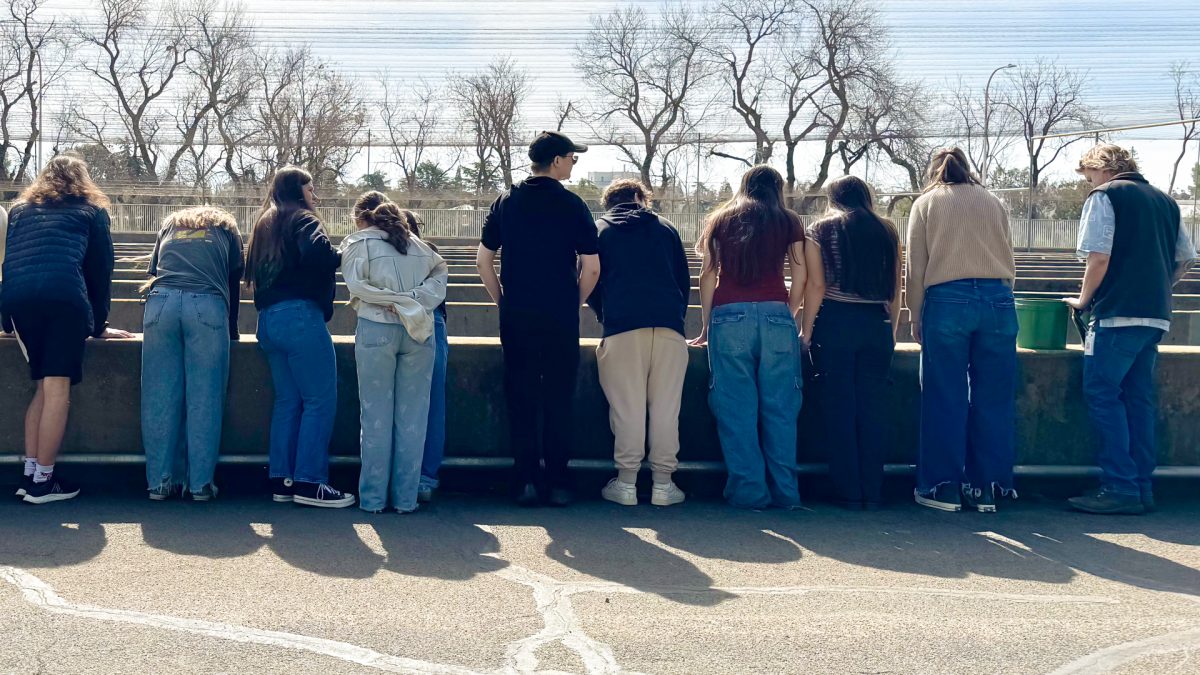
Garrett turned to GEAR UP’s partner school districts and encouraged them to adopt the Spinning Salmon Program. Together, she, Harte, and the GEAR UP advisors onboarded the first cohort—and all subsequent classes—of data collectors in Glenn, Colusa, and Tehama counties. In addition to regular classroom activities, GEAR UP also funded a range of enrichment experiences, including virtual Q&A sessions, guest speaker series, and field trips.
“When COVID-19 shifted how we ran GEAR UP in the schools, Spinning Salmon offered a way forward,” said Jared Beldon, GEAR UP Program Advisor. “We could keep our students thinking about college while still staying engaged in the material—even if it was on their Zoom screens. But the best part was that we all became a part of this national research project. I couldn’t believe that students, teachers, and GEAR UP advisors from rural Red Bluff, California were sending new findings to researchers solving a global problem.”
An Inclusive Science Education Curriculum
The CCCS and TDC research teams created the Spinning Salmon Program to be flexible and complementary to different types of course content. While many biology, environmental science, and life science teachers took in fish tanks, English, math, art, and physics teachers also participated in the study, integrating the student-centered data collection into their own curriculums.
“We talked about how the speed and temperature of water could impact a salmon’s likelihood of survival,” said Fred Null, a physics teacher at Red Bluff High School. “There were a lot of opportunities to think about our salmon in new contexts.”
Central to the Spinning Salmon Program curriculum was a focus on data literacy, encouraging students to analyze charts and graphs and develop new ways of visualizing their work. “Spinning Salmon was one of the few examples where data literacy in the classroom is working—and at a younger age than opportunities are typically provided, if ever,” said NOAA Senior Researcher Rachel Johnson.
Each classroom was also assigned a member of the TDC research team whose expertise aligned with the course subject. This established a direct line of communication between the students, teachers, and study team that ensured the project’s integrity and opened new lines of scientific inquiry as the students reported their questions and observations.
Participatory Science Engages All Kinds of Learners
As GEAR UP brought in more students and teachers to participate in the Spinning Salmon Program, Harte realized that the research team had a major opportunity to make their study even more inclusive to science learners. Thanks to a NOAA Bay Watershed Education and Training (B-WET) grant awarded to the Solano County Office of Education, the team expanded and adapted the Spinning Salmon Program for Solano continuation high schools and juvenile detention centers.
 “I kept asking myself ‘What does
universal access actually mean when you’re conducting
participatory science and need to ensure accurate data?’” said
Harte. “These student populations are an important piece of that
puzzle, and the results we saw were incredible. For many of those
students, it was the first time they wanted to do extended
research on their own. They didn’t want to miss class.”
“I kept asking myself ‘What does
universal access actually mean when you’re conducting
participatory science and need to ensure accurate data?’” said
Harte. “These student populations are an important piece of that
puzzle, and the results we saw were incredible. For many of those
students, it was the first time they wanted to do extended
research on their own. They didn’t want to miss class.”
This Solano County partnership also enabled the Spinning Salmon Program team to bring their research protocol to the Office of Education’s Deaf and Hard of Hearing Program. Similar to other student participants, students in the Deaf and Hard of Hearing Program observed fish tanks in their classroom and recorded data for the TDC research team. Their research experience culminated in a field trip to Nimbus Fish Hatchery in Folsom, California, where they shared their findings, questions, and personal stories with a CDFW interpreter who was fluent in sign language.
“Regardless of the barriers and severe language deprivation my students have faced,” said teacher Carly Davis, “Experiences like the Nimbus Hatchery field trip and projects like the Spinning Salmon Program bridge their academic and language gaps, building their resilience and sense of representation.”
A Space for Students to Educate and Lead
As the participants began finalizing their data collection, Harte, Jeffres, and Johnson brainstormed ways to deepen their understanding of and agency in the project. One idea they landed on was a student showcase where students could share what they learned. Becca VanArnam, a Ph.D. student in the UC Davis School of Education and CCCS graduate student researcher, leveraged the Community and Citizen Science in Conservation Fellowship she received from CCCS to fund a showcase for Solano County students and teachers who participated in the Spinning Salmon Program.
“My primary goal was to create space for students to see themselves in science and this research—not just as participants, but leaders who can bring others in,” VanArnam said. “The showcase was one opportunity for them to share their work, communicate what matters to them, and demonstrate how inclusive, community-driven science can make an impact.”
 To highlight the program’s
interdisciplinary approach, the participants were encouraged to
create presentations that brought together their salmon data with
creative writing, art, or other humanities subjects.
To highlight the program’s
interdisciplinary approach, the participants were encouraged to
create presentations that brought together their salmon data with
creative writing, art, or other humanities subjects.
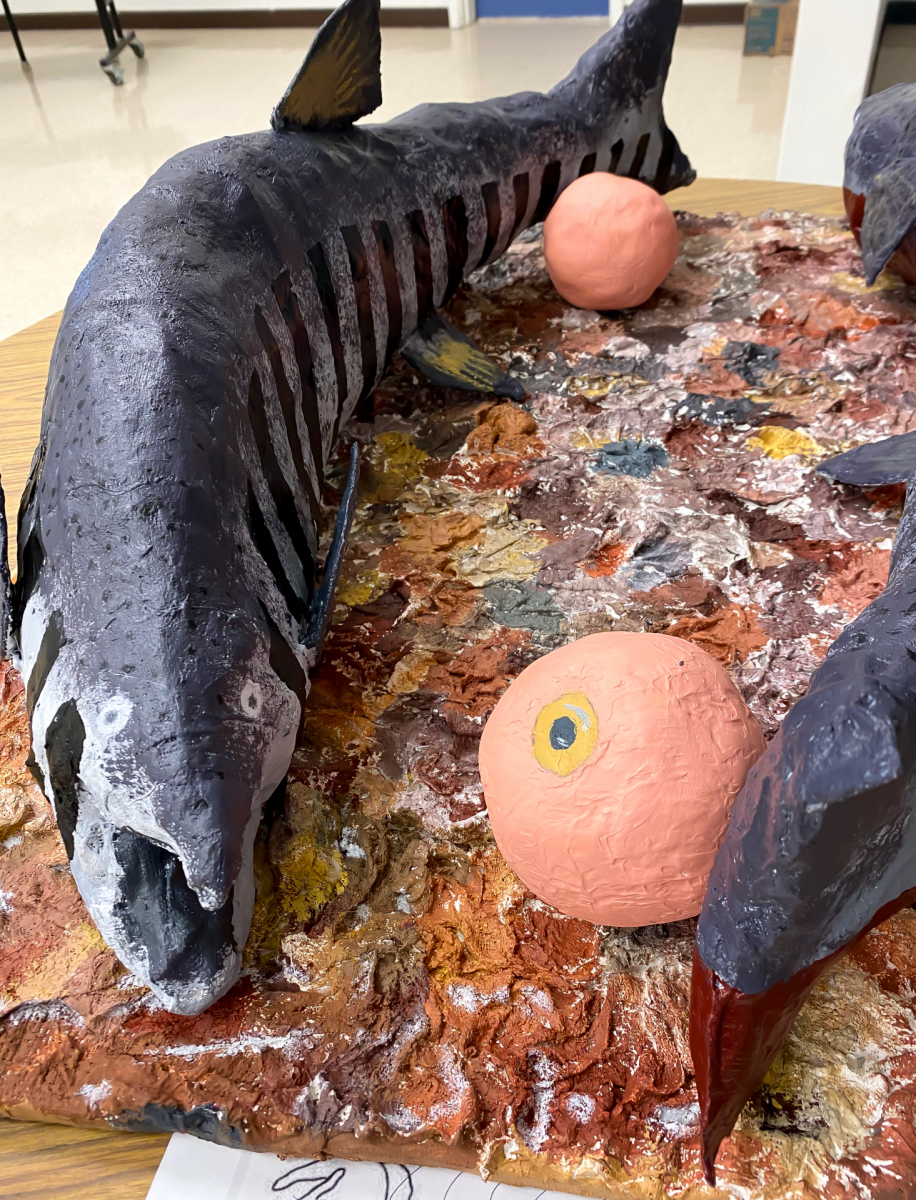
One class of Maine Prairie High School art students created a table-sized model of two papier-mâché salmon and fertilized eggs. The salmon were organized to reflect Yin and Yang, the Taoist symbol for complementary and opposing forces that work in harmony. The stripes and marks on the salmon’s bodies and the size of their eggs represented the observational data the students collected from their fish tank. “Our class kept asking, ‘how would you represent this?’” said art teacher Regina Richardson-Peterson. “That thought pushed us to think more deeply about the story behind our data.”
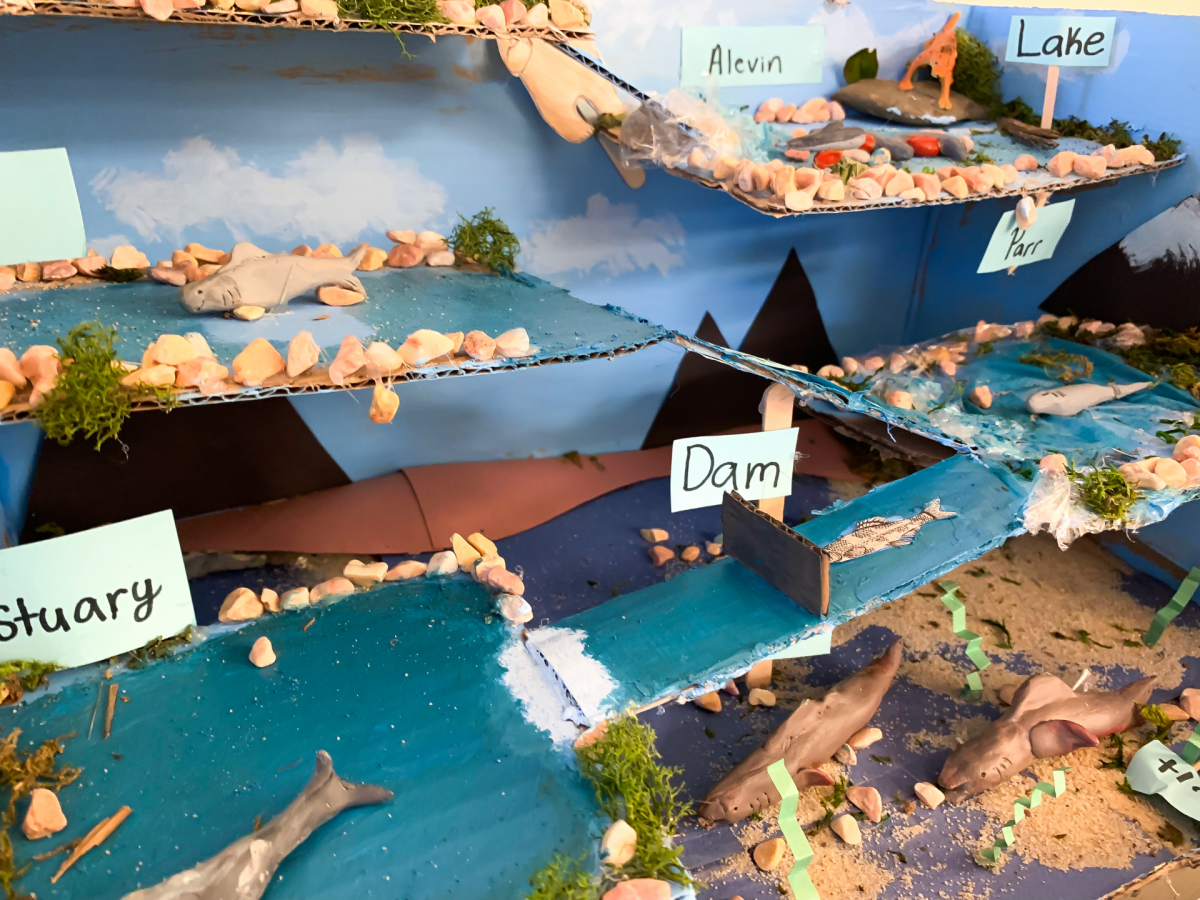 Two students from Fairfield High
School built a diorama of the salmon life cycle as they migrate
from the mountains to the ocean and back again. During their
presentation, they highlighted how floodplains and man-made dams
contribute to a salmon’s health and success laying eggs. “I
learned how important salmon are—not just as a living organism
and food sources for predators, but because, when they die, their
bodies put nutrients back into the soil,” said one of the
presenters. “It was exciting to be a part of a project that’s
having a real-world impact for salmon so they can continue
serving our ecosystem.”
Two students from Fairfield High
School built a diorama of the salmon life cycle as they migrate
from the mountains to the ocean and back again. During their
presentation, they highlighted how floodplains and man-made dams
contribute to a salmon’s health and success laying eggs. “I
learned how important salmon are—not just as a living organism
and food sources for predators, but because, when they die, their
bodies put nutrients back into the soil,” said one of the
presenters. “It was exciting to be a part of a project that’s
having a real-world impact for salmon so they can continue
serving our ecosystem.”
During the showcase, one student delivered a speech about his appreciation for fishing because it was an activity he and his grandfather used to do together. After his grandfather passed away, the student would revisit their favorite fishing spot, only to find it had become an inhospitable place for fish to populate. Participating in the Spinning Salmon Program inspired him to learn more about local sturgeon populations and the California Department of Fish and Wildlife regulations on recreational fishing.
“There have been a lot of ‘aha’ moments for our students who are now considering careers in science,” said Maine Prairie principal Angelina Arias.
From Student Researcher to Community Stakeholder
Who can do real science? The Spinning Salmon Program provides an expansive and innovative answer to that question. As a youth-engaged research study, the project moves scientific inquiry beyond academia, situating high schoolers as legitimate participants in the scientific process and stakeholders in the final results. The students weren’t just conducting a hands-on lab—they were contributing skills and knowledge to solve a problem happening in their local communities.
 Creating the Spinning Salmon Program
as an interdisciplinary citizen science project made data
collection more inclusive and accessible to all participants. The
students, teachers, advisors, and many other contributors that
Harte brought to the project didn’t need to know everything about
salmon, just how to collect data using the
tools and resources available to them. This model
demonstrates the potential of future research studies seeking to
understand climate-related challenges. With an equitable
framework in place, research can be scaled to solve difficult
questions—and still prioritize the community it’s seeking to
understand.
Creating the Spinning Salmon Program
as an interdisciplinary citizen science project made data
collection more inclusive and accessible to all participants. The
students, teachers, advisors, and many other contributors that
Harte brought to the project didn’t need to know everything about
salmon, just how to collect data using the
tools and resources available to them. This model
demonstrates the potential of future research studies seeking to
understand climate-related challenges. With an equitable
framework in place, research can be scaled to solve difficult
questions—and still prioritize the community it’s seeking to
understand.
“As researchers in a university, we rarely get the chance to go into a high school, talk about our work, and set up a whole project to include students,” said Jeffres. “Research shouldn’t work in a vacuum or with researchers leading the charge. If we really want to have salmon in our future, it’s the young people who will have to make that happen. The Spinning Salmon Program is building that foundation for them.”
The Spinning Salmon Program Team
UC Davis Center for Community and Citizen Science
- Dr. Heidi Ballard, Founder and Faculty Director
- Dr. Ryan Meyer, Executive Director
- Peggy Harte, Youth Education Program Manager
- Becca VanArnam, graduate student researcher
- Judi Eppele, graduate student intern
UC Davis Center for Watershed Sciences
- Dr. Carson Jeffres, Senior Researcher
- Abigail Ward, Assistant Specialist
- Miranda Lowe-Webb, Junior Specialist
National Oceanic and Atmospheric Administration
-
Dr. Rachel Johnson, Senior Researcher